Airline Marketing
More direct bookings on the routes that pay for themselves.
Regional carriers, LCCs, and thin-route operators: buyers research routes and operators before they enquire. Be the page they find.
A Pacific Northwest flight school and FBOA UK flight schoolA North American charter operatorProposal in 48 hours
Built for airline commercial teams balancing route economics, direct-channel pressure, and the need to turn schedule capacity into profitable demand.
Typical starting point: marketing from $1,500 USD/month and websites from $3,500 USD. Scope changes by market and service mix. Every engagement is scoped to your operation — no packaged plans.

Results
Route-page architecture + thin-route demand-seeding fluency
Airline demand moves when route pages answer schedule, fare, baggage, aircraft, operating authority, and thin-route demand questions before the traveller or corporate booker returns to a major carrier.
01
City-pair search
02
Schedule and fare proof
03
Authority and aircraft fit
04
Booking or campaign action
Quick answer
How do regional airlines compete with major carriers in digital marketing?
Regional airlines win on route-specific searches and local market authority majors underinvest in. A Darwin to Kununurra or Townsville to Mount Isa operator can dominate those route queries with landing pages, fare transparency, schedule clarity, and destination content. Majors optimise network-level branding, not thin routes. Build content around the communities you serve, point-to-point convenience, and local knowledge corporate airline marketing teams cannot replicate. Local SEO, Google Business Profile at each airport, and route-specific paid search deliver disproportionate ROI.
Fit check
Who Airline Marketing is right for — and who it is not.
Right fit
- Operators with real commercial intent — budgets that can sustain 6-12 months of compounding SEO and content work, not a one-quarter experiment.
- Teams who want an aviation-native partner who has operated inside the industry, not a generalist agency learning the regulatory language on your account.
- Businesses that measure marketing by the enquiries, quote requests, and bookings that actually convert — not by impressions, reach, or vanity traffic.
- Operators open to honest positioning and a fixed plan rather than a menu of services to pick from.
Not the right fit if…
- Hobby aviation clubs, volunteer-run groups, or recreational bodies where the budget structure does not match a commercial agency engagement.
- Teams looking for a 30-day SEO turnaround on competitive commercial terms — no specialist can deliver that honestly, and we will not pretend otherwise.
- Businesses wanting a transactional "run the ads, send the invoices" relationship with no strategy or measurement accountability.
- Operators whose primary marketing problem is an offer-and-pricing problem rather than a visibility problem — agency marketing cannot fix a product that is not commercially competitive.
More direct bookings on priority routes
Protect high-value origin-and-destination demand from OTAs and metasearch by strengthening the pages around the routes that matter most.
Better route-launch and underperforming-route support
Give new, seasonal, and marginal routes a stronger digital launch plan so they earn awareness and repeat demand faster.
Stronger merchandising and ancillary yield
Clarify fares, bags, seats, upgrades, and travel rules so more revenue stays in the direct channel instead of leaking during comparison.
- page architecture
- Route
- demand-seeding fluent
- Thin-route
- proposal turnaround
- 48h
Benchmark: load factor, RPK, and yield — the metrics that matter at airline scale
Benchmark: route-level demand data, not article counts
Proposal within 48 hours — across all sectors
Where route demand usually starts
How airline commercial teams usually come to us.
Most airline teams do not need more traffic in the abstract.
Build route, airport-pair, and destination pages that capture high-intent demand before aggregators and larger networks take the click.
Best when the airline has valuable route demand, but too much of it is being intermediated or lost to bigger brands.
Coordinate launch pages, local-market content, paid campaigns, and partner messaging so new or underperforming services have a better chance of reaching sustainable load factors.
Best when network priorities are changing faster than the website and campaign assets can keep up.
Tighten fare-family, baggage, seat, upgrade, and travel-rule presentation so more passengers book direct and complete higher-value orders.
Best when the airline is getting consideration but conversion or ancillary attach is underperforming.
What drives growth
What actually moves airline revenue online.
Airline growth online is not just about being found.
Visibility
Win route-specific demand before intermediaries do
Priority routes need dedicated pages and search coverage so direct demand is not surrendered to OTAs, metasearch, or larger carriers.
Trust
Give passengers enough clarity to book direct
Schedule, aircraft, bags, fare rules, and disruption support all influence whether revenue stays in the airline channel.
Merchandising
Make the offer feel worth buying from the airline
Fare families, ancillaries, bundles, and loyalty value should read like a commercial offer, not a policy maze.
Conversion
Back route launches with serious campaign assets
New and seasonal services need landing pages, local-market content, and paid support tied to actual network priorities.
Worldwide service area
Remote delivery worldwide — local depth where the buying decision changes.
We work remotely with commercial aviation teams worldwide. Australia, the United States, the United Kingdom, Canada, and New Zealand have dedicated pages — everywhere else starts on the global aviation-marketing route.
What we fix
The problems we solve for airline teams.

Photo: Marek Piwnicki / Pexels
Vanity reach over revenue metrics
Campaigns focus on reach but underperform on the metrics commercial directors actually care about — load factor, RPK, yield, and ancillary attach rate — instead of vanity enquiries that do not connect to revenue.

Photo: Amar Preciado / Pexels
Route launches with no demand seeding
Route-launch demand seeding is absent: a new city-pair launch has 8 weeks to seed search demand before the first flight, and most airline marketing teams treat the route page as an afterthought rather than the most important SEO asset of the launch window.

Photo: Gustavo Ramirez / Pexels
Ancillary revenue siloed from booking
Thin-route fill and ancillary revenue (bags, seat selection, change fees, frequent-flyer programme contribution) live in a separate marketing silo from the booking path, leaving the website experience disconnected from the revenue mix the commercial director optimises against.
Photo: Dylan Bueltel / Pexels
Route narrative handed to competitors
IATA slot windows, code-share partnerships, and named-route demand thesis content (why this city pair, why now, what the corporate-travel and FIFO mining/resources demand looks like) are invisible — and that absence is what hands the regional-route narrative to whichever major carrier has a token presence.

Photo: Magda Ehlers / Pexels
Why Off The Ground
Why airline teams choose Off The Ground.
Strategy tuned to regional vs LCC vs charter-spin-airline positioning — picking one and building route-specific authority for it, not trying to address all three on one page.
Route-page architecture mapped to "[origin] to [destination] flights" intent, with fare range, schedule frequency, aircraft type, baggage policy, and named city-pair demand thesis above the fold.
Content structures that support both search discovery and customer confidence — IATA / Part 121 / CASA AOC fluency surfaced where it matters, plus the FIFO / corporate-travel / leisure-route framing each region actually buys.
Next Step
Want a clearer plan for stronger route performance and more direct revenue?
We will review how priority routes are discovered, where OTAs or metasearch are intercepting demand, and which pages, offers, or campaigns should be fixed first.
Request your proposal →Route-page architecture + thin-route demand-seeding fluency
Airline marketing is anchored on regional and thin-route specifics (Darwin–Kununurra, Townsville–Mount Isa, FIFO mining routes). Route-page depth — "[origin] to [destination] flights" intent captured with fare range, schedule frequency, aircraft type, and named city-pair demand thesis above the fold.
Aviation proof
Real outcomes across our aviation work
We lead with documented client results from flight school, charter and aviation-safety engagements. Sector coverage is growing — see our full case-study library and client results below.

Photo: Maël BALLAND / Pexels
A Pacific Northwest flight school and FBO
22 of 26 tracked keywords in top 3 — Kelso, WA flight school and FBO
Read the case study →
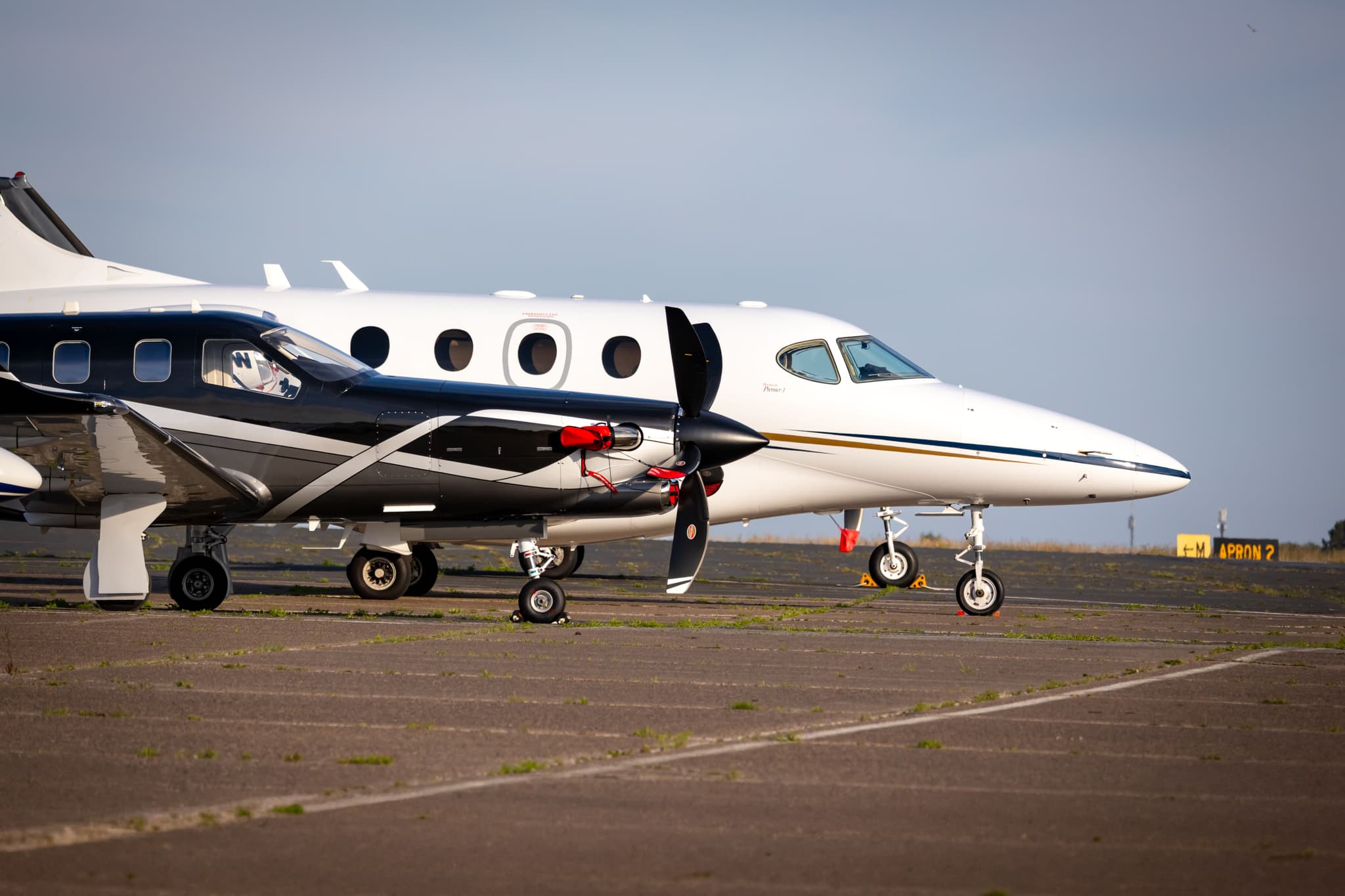
Photo: Joerg Mangelsen / Pexels
A North American charter operator
Cost per qualified lead down from $180 to $4.20
Read the case study →

Photo: Necati Ömer Karpuzoğlu / Pexels
A UK flight school
From 3 enquiries per month to 40+ consistently
Read the case study →
Inside the stack
The specialist pages behind the route-demand plan.
You do not need to buy these one by one. These pages explain the SEO, website, content, and Google Ads work that usually sits underneath stronger route visibility and campaign conversion.
Ready when you are
Get a tailored Airline Marketing proposal in 48 hours.
Written plan, scope, and pricing by email. No discovery call required.
Frequently Asked Questions
What airline teams usually ask us.
Social media serves three airline functions: brand reinforcement, customer service responsiveness, and route promotion. Real operational content wins: crew stories, destination highlights, fleet updates, and behind-the-scenes transparency, not generic travel inspiration from any brand. Smaller carriers and charter airlines use it to announce new routes, promote seasonal fares, and build community loyalty. Paid social targeting frequent travellers and corporate travel managers on LinkedIn supplements search-based acquisition, but it cannot replace SEO and website investment; it amplifies organically ranking content.
Route-level marketing starts with launch: a city-pair has 6-10 weeks to seed search demand before first flight, and the route page (fare structure, schedule, aircraft, destination content, local SEO at both endpoints) matters most. After launch, defend visibility against aggregators (Google Flights, Skyscanner, Kayak capture most route-query clicks), retaining frequent flyers via email, loyalty offers, corporate travel-manager relationships. Airlines treating route pages as products (pricing transparency, schedule clarity, destination guides, clearly labelled page data) outperform network-brand campaigns on direct bookings.
Each route gets a "[origin] to [destination] flights" page: fare ranges, schedule frequency, aircraft type, flight duration, baggage policy, booking above the fold. Destination content on local transport, accommodation, business travel tips, tourism highlights adds topical depth, capturing informational searches feeding bookings. Seasonal or charter routes need "how to get to [destination]" and "[destination] travel guide" content. Suits CASA-regulated Australian regional carriers, FAA Part 121 thin-route operators in the US, and EASA carriers linking underserved city-pairs where competition is weaker.
Regional and route-level work usually scopes into Glass Cockpit ($5,500/month) or Flight Director (from $8,500/month) territory, with ad spend separate. Route pages, demand-building programmes on thin routes, and multi-market campaigns carry more moving parts than a single-hub operation. Pricing arrives in writing within 48 hours of enquiring — plan, scope, and tier recommendation by email before any commitment.
An aviation-only team — every contributor holds an aviation background, led by a commercial pilot and former flight school general manager. Airline copy is written against route economics and the passenger-versus-cargo audiences the page must serve, in the language route and commercial teams use. No travel-agency template re-skinned with airplane photos.
Still deciding? Get a tailored Airline Marketing proposal in 48 hours →


Ready To Grow?
Want a stronger digital growth plan for your airline?
We will map the route, channel, and merchandising gaps holding back direct bookings, ancillary yield, and route performance.