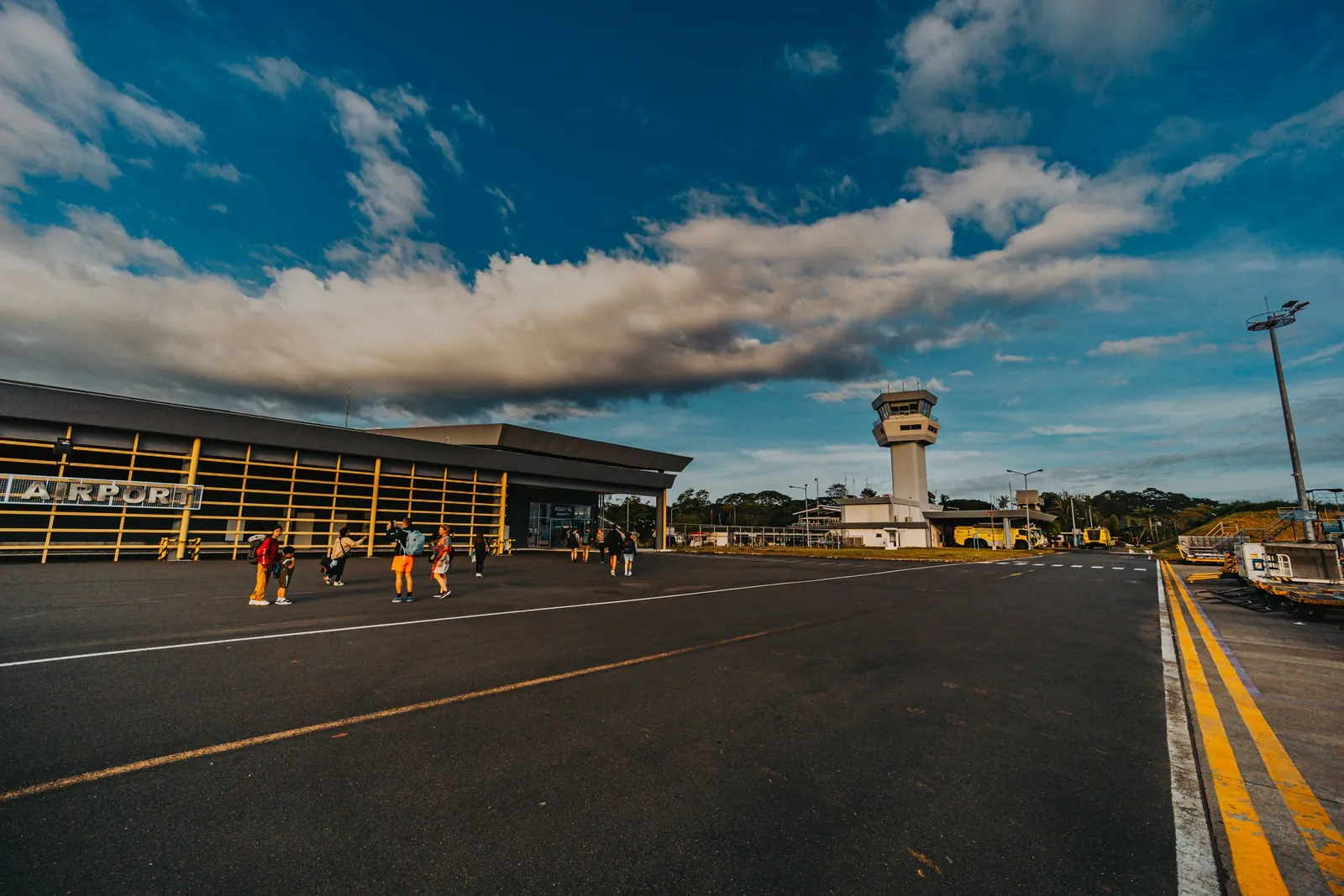

Airport branding is everything that tells people which airport this is and why to use it: the name, the visual identity, the signs and the website. For a regional airport it has one commercial job, which is to give passengers, airlines, tenants and the community fewer reasons to choose somewhere else.
"Regional" is a working term. The FAA sorts commercial service airports by their share of national passenger boardings, from large hubs with 1 percent or more down to nonhub airports with less than 0.05 percent. This article is written for the small hub and nonhub end of that list, where something bigger is usually within driving distance.
It supports our airport marketing program.
What a regional airport brand is for
A hub competes with other hubs. A regional airport competes with the highway.
Local residents know the airport exists. The open question is whether they check it before they book from the larger airport down the highway. Airlines and tenants ask a version of the same thing: is this a real market, run by people who are easy to deal with?
Key point
The brand is working when a resident checks your flights and parking before looking at the hub, and an airline planner can tell within a minute which market you serve.
The five audiences an airport brand has to work for
Each audience is making a different decision. The brand has to make a different thing obvious to each.
| Audience | The decision they are making | What the brand must make obvious |
|---|---|---|
| Passengers who could drive to a bigger airport | Which airport to book from | Where you fly, the real door-to-door time and cost, how easy parking and security are |
| Airlines | Where to put an aircraft | Which market this is, and that the airport is professionally run |
| Tenants and developers | Where to sign a lease | That land and hangars are available, on clear terms, with a person to call |
| The community | Whether the airport is theirs and worth backing | What it brings: flights, jobs, medical and emergency access |
| The board or sponsor | Whether to fund the next project | Evidence that people use the airport and value it |
One identity cannot say five things at once. It can be built so each audience finds its own door, with the passenger door the widest.
Naming: the airport name is a search term
A name does two jobs. It tells strangers where you are, and it tells locals the airport is theirs.
Travelers search by the city or region they are leaving from or going to. If the name on the building honors a person, or uses a county name outsiders do not know, the place name has to sit beside it everywhere: the website title, map listings and airline booking screens.
Before anyone proposes a rename, check four things:
- what people already type to find you, from your search data
- what name airlines and booking sites display today
- whether the three-letter code travelers know still makes sense beside it
- which region the name claims, and whether the neighbors accept that
A full rename touches every sign, document, listing and system that carries the old one. Often the formal name can stay, with the place name added as a fixed descriptor.
Identity: a system a sign shop can follow
A logo is the smallest part of the identity. The useful part is a set of rules that holds up when a contractor, a tenant or a new staff member has to apply it.
That set covers:
- a wordmark that reads in one color on a hangar door and at tab size in a browser
- colors and type chosen for legibility on signs first, print second
- a photo style built on your real terminal, apron and people, with no stock images
- naming rules for parking products, the business park, the general aviation terminal and air service campaigns
- a plain, local, specific voice
The test is simple. Could a vendor holding the guidelines produce a correct sign without phoning you?
Wayfinding is the brand passengers actually touch
A passenger meets your signs far more often than your logo. The highway exit, the entrance road, the parking lots, the curb, check-in, security, the gate, baggage claim and the way out are the brand as they experience it.
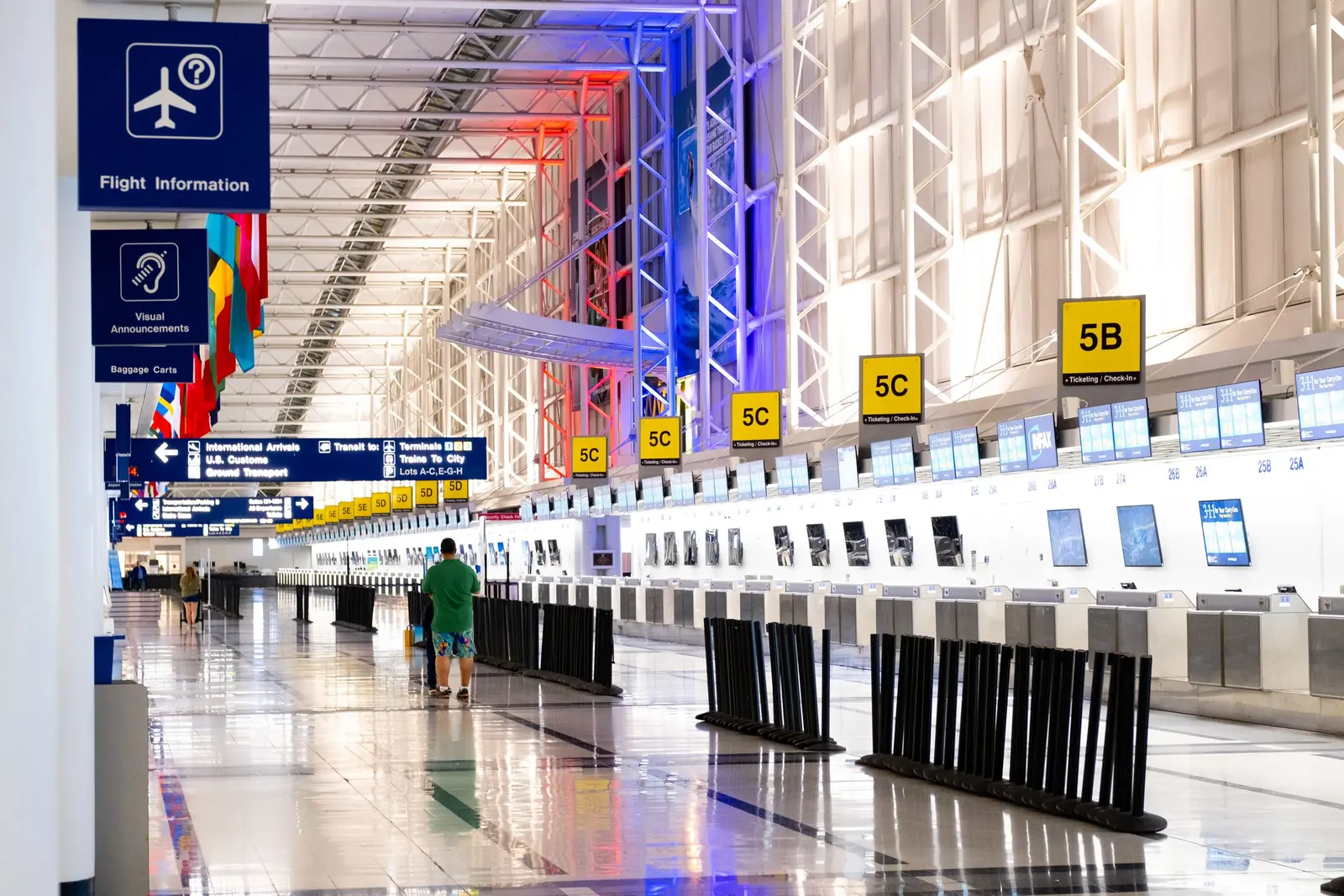
A useful reference for the brief is ACRP Report 52, FAA-sponsored research published by the Transportation Research Board. It covers roadways, parking, curbside and the terminal.
The brand rule inside wayfinding is consistency of words. If the website sells an "Economy Lot," the road sign says "Economy Lot." The same goes for terminal names, door numbers and pickup zones.
A regional airport's advantages are usually physical: a short walk, close parking, a quick security line. Signs and web pages should state them as facts.
The website is the first terminal
For many travelers the first visit is online. They want to know where they can fly, what parking costs, how early to arrive and how to get there. The site has to answer on a phone in a few taps.
It also has to serve the other audiences without burying them under passenger content. Airlines, tenants and general aviation pilots each need a visible way in from the homepage. We describe how we build that on our airport website design page.
AI assistants add a new reader. People now ask them which airport to fly from. They answer from pages that state facts plainly: destinations, airlines, drive times and parking prices. A consistent airport name and place name across your site and listings helps those tools connect the facts to you.
How to brief airport branding work
A good brief settles the arguments before design starts. Write it in this order.
State the commercial problem
Leakage to a hub, empty lease parcels, a route at risk. Branding work without a problem to solve turns into a logo debate.
List the audiences and their decisions
Use the table above and rank them. The ranking settles most arguments later.
Inventory every place the name appears
Road signs, terminal signs, vehicles, uniforms, the website, map listings, airline systems and official aeronautical records.
Set the scope and the owners
Name, identity, wayfinding and website are four projects. Say which are in, and who at the airport signs off each one.
Agree the measures before design starts
Pick them from the table below and record today's figures.
Plan the rollout by replacement cycle
Change the website and listings first. Replace signs and vehicles as they come due, unless a sign is actively sending people the wrong way.
What to measure
None of these numbers needs new software. Most are already collected somewhere in the airport.
| Measure | Where it comes from | What it tells you |
|---|---|---|
| Passenger boardings | FAA annual boarding data | Whether more people use the airport, year on year |
| Share of local travelers using your airport | A leakage study built on BTS ticket data | Whether residents choose you over the hub |
| Searches by airport name and by "flights from" your city | Google Search Console | Whether the name and the place are connecting |
| Parking and flight-search clicks | Website analytics | Whether the website does the terminal's first job |
| Air service and leasing inquiries | Forms tagged by audience | Whether airlines and tenants find their door |
| Wayfinding questions and complaints | Information desk and call logs | Whether the signs work |
Boardings also move when an airline adds or cuts a route, so read them beside the other measures.
Where this fits
Branding is one part of an airport's commercial case. The route side is in our guide to air service development, and the full program is on the airport marketing page.
Off The Ground Marketing is an aviation and aerospace marketing agency with 12 in-house staff across the United States and Australia. It was founded in 2018 by a commercial helicopter pilot, so an airport's operational language is familiar ground.
Next step
If you are scoping branding or website work, request a proposal and tell us the commercial problem behind it. We reply with a written scope and price.
If you want evidence first, the AI Visibility Audit shows how your airport appears in search and AI answers for your city and region today.