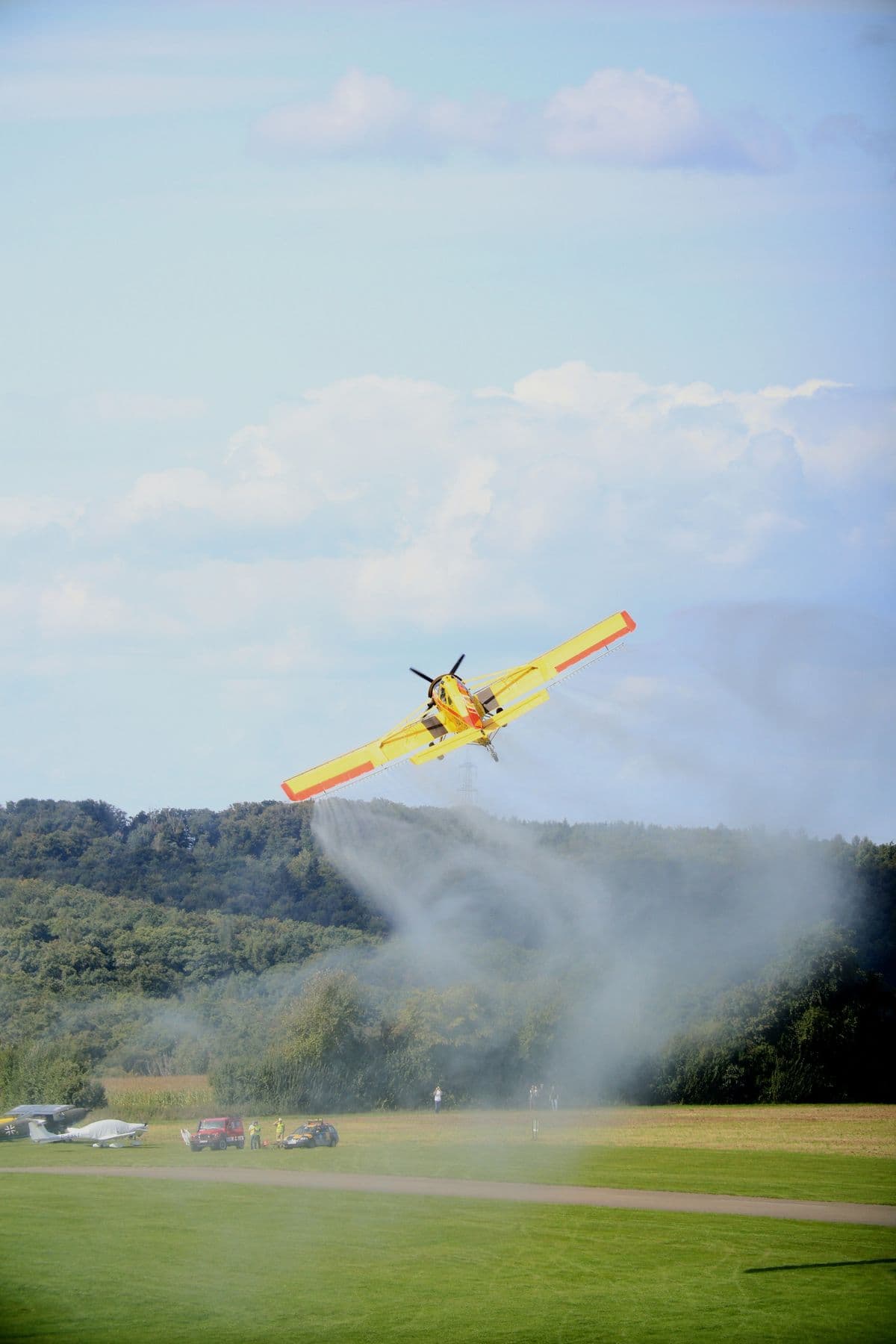
Agricultural aviation operators do not need broad consumer awareness. They need to be trusted by a small group of commercial buyers before the season starts: growers, agronomists, farm managers, and input suppliers who care about coverage quality, treatment windows, and operational reliability.
That changes the marketing job completely. The operators who win more work do not market themselves like general aviation businesses. They publish the crops they serve, the regions they cover, the way they manage documentation, and the compliance framework that makes a farm buyer comfortable putting high-value acreage in their hands.
Agricultural Aviation Is a Different Marketing Problem
The buyer for an aerial application operator is rarely searching for "aviation services." They are searching for help with a crop problem, a timing problem, or a capacity problem. A cotton grower needing fungicide cover before a weather window closes is not interested in aviation branding. They want to know whether you can turn around quickly, operate safely, and apply accurately.
That means your website and outreach need to speak in agricultural terms. Crop mix, treatment timing, spray drift controls, and local seasonal realities matter far more than generic claims about experience or quality. If your content reads like a tourism operator or a charter company, serious agribusiness buyers will assume you do not understand their world.
The same logic applies to your service geography. Agricultural aviation is highly local even when the business itself is mobile. Buyers want to know whether you already work their district, understand their crops, and can support them through a full season rather than a single job.

The Season Is Won Before the Aircraft Starts Flying
Most operators market too late. They wait until spray season begins, then update a homepage banner or make a few calls. By that point, the best clients have already decided which operators they trust for the year.
Pre-season marketing is where agricultural aviation businesses create leverage. This is when growers are reviewing acreage plans, agronomists are discussing treatment programs, and farm managers are deciding which operators are credible enough to call when timing becomes critical. If your business is visible and useful during that planning window, you are far more likely to be shortlisted when demand spikes.
Map Your Commercial Territory
Build a simple matrix of the districts, crops, and treatment categories that actually generate revenue for you. That gives you the basis for service pages, outreach lists, and paid campaigns. Marketing by county, crop, and season will always outperform a single generic aerial application page.
Publish Pre-Season Buyer Pages
Before the season begins, create pages and emails that answer the questions buyers ask ahead of time: where you operate, which crops you treat, your aircraft capacity, how documentation is handled, and what lead time is realistic in peak periods. This reduces friction when enquiries start arriving.
Run Light Geo-Targeted Campaigns Early
You do not need heavy spend. A focused search and remarketing campaign aimed at the regions you serve is enough to stay visible while growers and agronomists are planning. The objective is not volume. It is to be the operator buyers remember when urgency arrives.
Follow Up With Operational Proof
Seasonal campaigns work best when the follow-up includes tangible material: fleet details, insurance certificates, operator approvals, and examples of reporting. The buyer is not looking for inspiration. They are looking for proof you can be trusted with commercially significant acreage.
Territory-Based SEO Beats Generic Visibility
Local SEO matters in agricultural aviation, but not in the same way it matters for a cafe or a local trades business. A Google Business Profile helps, but it is not enough on its own. Buyers search by region, crop, and use case: "cotton aerial spraying Darling Downs," "rice aerial application Riverina," "fungicide plane operator north Queensland."
Those searches are commercially strong because they combine geography with operational intent. A well-built territory page should explain your service radius, major crop types, turnaround expectations, and any operational constraints that matter in that district. It should also show that you know the region rather than just naming it.
This is one of the clearest opportunities in the sector. Many operators still rely on a single homepage plus a phone number. That leaves obvious search demand open to the business willing to build a proper location and crop architecture. If you need a broader framework for that process, see our guide to local SEO for aviation businesses.
Content That Educates Agribusiness Buyers
Agricultural buyers do not need high-volume blog content. They need targeted content that lowers perceived risk. The strongest topics are practical: how treatment documentation works, how operators manage weather interruptions, what coverage reporting looks like, how pilots coordinate with agronomists, and what compliance approvals actually mean in plain language.
That content does two jobs. First, it helps buyers compare you against less transparent competitors. Second, it gives input suppliers, consultants, and internal procurement staff something credible to forward inside the decision process. In this sector, shareable technical clarity is more useful than polished brand copy.
Treatment records, approval status, and operational documentation are not back-office details in agricultural aviation. They are sales assets. Farm buyers see them as evidence that an operator will protect yield, compliance, and insurance position when the season gets busy.
For operators that want to stay visible between peak periods, a focused content plan is far more effective than sporadic posting. One page explaining how you manage application quality in specific crops can produce better enquiries than ten generic articles about aviation marketing. For that reason, content should be built around the farm buyer's risk questions, not around vanity traffic goals. Our article on aviation content marketing strategy covers the mechanics in more detail.

Fleet and Compliance Proof Close Serious Enquiries
When a buyer is close to making contact, they want specifics. What aircraft do you operate? What load capacity and typical turnaround do you support? What approvals do you hold? How is maintenance managed? How are pilots trained for the work profile? What reporting can the client expect after application?
This is where many operator websites fail. They ask buyers to call for basic information instead of publishing enough operational detail to justify the call. That creates unnecessary friction at exactly the point where the buyer is ready to decide.
A stronger approach is to treat operational proof as commercial content. Publish aircraft summaries that relate to productivity and suitability. Explain your approval framework. Show what treatment reporting looks like. Clarify how you coordinate with agronomists and landowners. Serious buyers are not put off by detail; they are reassured by it.
The operators who grow fastest are usually the ones who make commercial confidence easy. They remove guesswork before the first phone call and make it obvious that they understand both aviation risk and farm economics. If you want help building a marketing system for an aerial application business, contact Off The Ground Marketing.