
Aerospace machine shops get more RFQs when a sourcing engineer can confirm three things in one visit: the shop holds the certification the program needs, it can cut the part, and there is a safe way to send a drawing. Machine shop marketing is the work of putting that proof on pages a buyer finds when they search by process, material and part size.
Most shops we look at already have the capability. What they lack is a page that shows it. The certificate is a logo in the footer, the equipment list is an old PDF, and the only way in is a general contact form.
This guide walks through what to build, in the order a buyer checks it. The commercial program behind it is on our aerospace marketing page.
What a sourcing engineer checks before sending an RFQ
A sourcing engineer building a bid list is trying to rule shops out quickly. They are working from a drawing, a material callout and a delivery date, and they have a list of candidate suppliers to cut down before lunch.
They look for the same things in roughly the same order:
- the quality certificate, its revision and its scope
- whether the shop runs the process the part needs
- whether it works in the specified material
- whether the part fits on the shop's machines
- how the shop inspects and reports, including first article inspection
- how to send a drawing, and under what terms
The certificate comes first because it can be checked independently. The International Aerospace Quality Group runs OASIS, an online database of suppliers certified to the 9100 series, and a careful reviewer will look you up there. Your site should state the same standard, revision and scope that the OASIS record shows.
Key point
A buyer does not read a machine shop website. They check it. Every page should answer a yes or no question the buyer already has.
We covered the buyer's side of this in more depth in how OEM procurement engineers shortlist suppliers.
Capability pages by process, material and envelope
One "Capabilities" page with a bulleted list is not enough. Engineers search for a specific process in a specific material, and a single page cannot answer all of those searches well.
Build a small set of pages, each one answering one kind of question.
| Page | What goes on it | The question it answers |
|---|---|---|
| One page per process | Multi-axis milling, turning, grinding, EDM, and any special process you hold approval for | "Do they run this process in-house?" |
| Materials | Alloys by family and grade, such as aluminum 7075, titanium Ti-6Al-4V and stainless 17-4 PH, with the forms you stock | "Have they cut this material before?" |
| Work envelope | The largest part each machine can hold, in inches and millimeters | "Will my part fit?" |
| Tolerances and finishes | What you hold routinely, and what you quote case by case | "Can they hold the callout?" |
| Inspection | Measuring equipment, reporting formats and first article inspection | "How will they prove conformance?" |
Write these pages from what the shop does every week, not from the outer limit of what a machine could do in theory. A tolerance you held once on a good day is not a capability, and a buyer who sends work on that basis will not send a second job.
First article inspection deserves its own short section. The IAQG publishes it as a standard in its own right, 9102, First Article Inspection Requirement, and buyers expect a shop to say plainly whether it reports to that format.
Search work for these pages is covered on our aerospace SEO page.
An equipment list that is specific
"The latest CNC equipment" tells an engineer nothing. An equipment list earns its place when it reads like an asset register.
For each machine, give the make and model, the number of axes, the travels, the spindle speed, and anything that changes what the machine can produce, such as a pallet system, a sub-spindle or probing. Group the list by process so it is easy to scan.
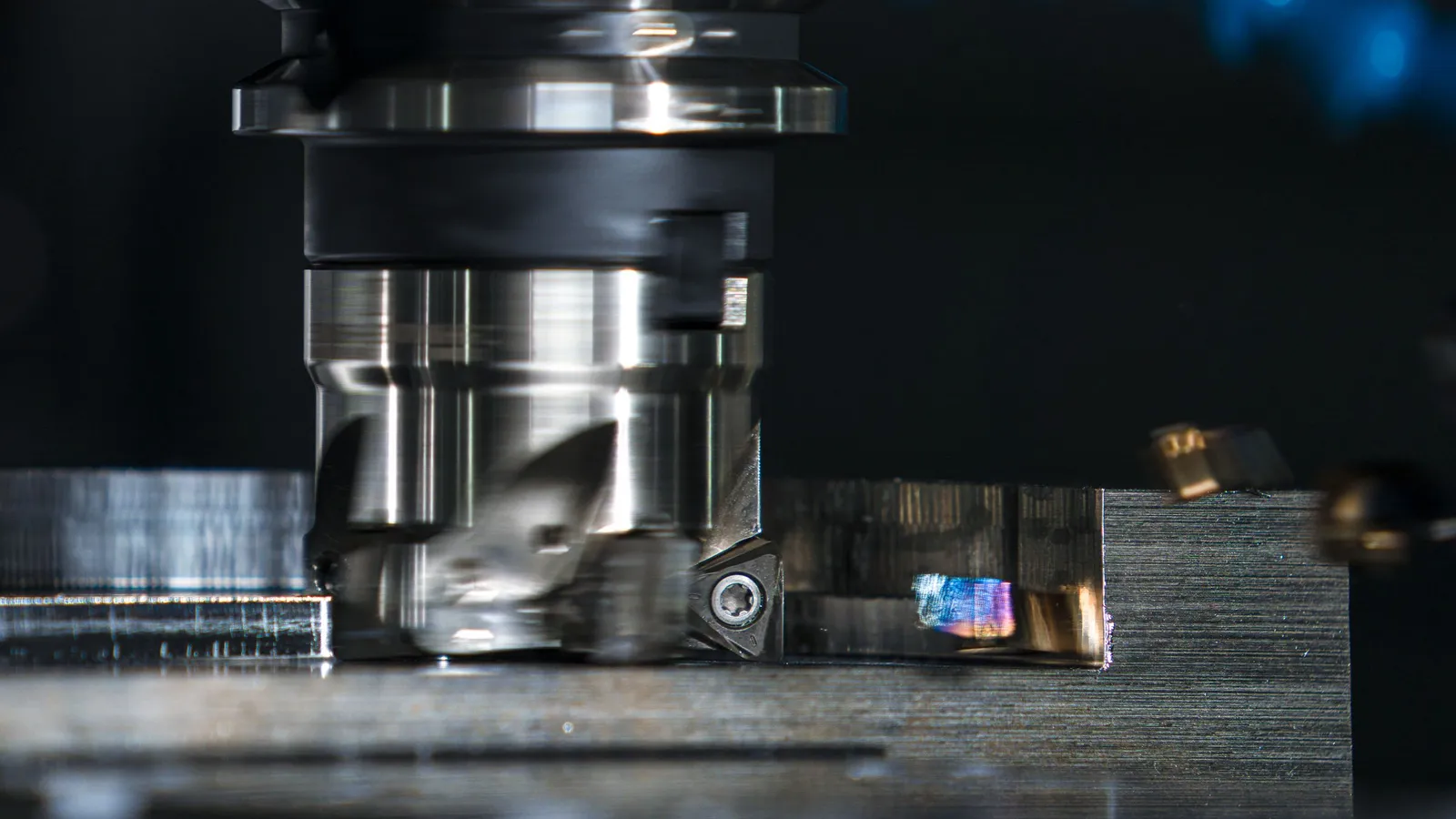
Do the same for inspection equipment. A coordinate measuring machine with its measuring volume listed is a fact a quality reviewer can use.
Keep the list current. An engineer who quotes against a machine you sold last year has wasted a day, and you have lost the next RFQ from that desk. Put a "last updated" date on the page and give someone on the shop floor the job of keeping it true.
Use your own photographs. Stock images of machines you do not own are worse than no images, because the engineer will ask about them.
An RFQ route with drawing upload and NDA
The general contact form is where most aerospace RFQs go to die. It has no place for a drawing, no mention of confidentiality, and no hint of who reads it.
A proper RFQ route is a short sequence the buyer can see before they start.
Say what you need to quote
List it on the page: drawing or model, material, quantity, required delivery date, and any special process or inspection requirement. A buyer who knows this up front sends a complete package the first time.
Offer the NDA before the drawing
Let the buyer request your NDA, or send theirs, before any file changes hands. Many will not send a drawing without one, and saying so on the page shows you know how this works.
Ask about export control first
Add one question to the form: is any part of this request export controlled? If the answer is yes, do not accept the file through the public form. Tell the buyer your quote desk will reply with the transfer method your compliance officer has approved.
Route it to a named desk
Send the request to the estimating inbox, not the general one. Confirm receipt on screen and by email, with a reference the buyer can quote.
Tell them what happens next
State who reviews the package and when they will hear back. Then do it.
The export control question matters most on defense work. The ITAR's definition of technical data includes drawings and plans for defense articles, and a US manufacturer of defense articles has to register with the Directorate of Defense Trade Controls even if it never exports. We explain where marketing copy ends and controlled data begins in ITAR, EAR and your website. Your export-compliance officer decides how files reach you, not your web developer.
Response-time promises you can keep
Speed matters in quoting, and the temptation is to promise more of it than the shop can deliver. Resist that.
Publish two commitments only if you can meet them every week: how fast you acknowledge an RFQ, and how fast you return a quote or a no-quote for a standard package. Set them from what your estimators do now, not from what you wish they did.
A fast no-quote is worth publishing too. A buyer who learns quickly that the part does not suit you can move on, and will come back with the next one. A buyer who waits a week for silence will not.
If the estimating desk is one person, say what happens when they are out. Buyers plan around honest lead times. They do not forgive missed ones.
Measure RFQs, not traffic
A machine shop does not need many visitors. It needs a small number of the right engineers, and it needs some of them to send a drawing.
Report on the steps a buyer takes:
- RFQs received, by the page or channel that started them
- the share that fit your processes, materials and envelope
- quotes sent and no-quotes sent
- purchase orders won, and their value
- NDA requests and supplier-form requests, which often come before the first RFQ
Rankings and visits are early signs only. If the titanium milling page starts to appear for the searches engineers type, that is worth knowing. It is not the result.
Because qualification is slow, judge the work over several quarters. One new customer on a long-running part number can outweigh a year of effort.
Who can help an aerospace machine shop get more RFQs?
Three kinds of help exist, and each suits a different shop.
A marketing hire inside the shop knows the work best but rarely has web, search and content skills in one person. A general industrial agency can build a clean site but usually has to be taught what AS9100 scope, first article inspection and export control mean before it can write a capability page. A specialist aerospace agency already knows the buyer and the constraints.
Off The Ground Marketing is the third kind. We are an aviation and aerospace marketing agency with 12 in-house staff across the United States and Australia, plus specialist contractors with aviation fluency, founded in 2018 by a commercial helicopter pilot. We build capability pages, RFQ routes and the search work around them for AS9100 suppliers.
Whoever you choose, ask them to explain how a sourcing engineer builds a bid list. If they cannot, they will write you a brochure.
Next step
If you want to see how your shop shows up when an engineer or an AI assistant searches for your processes, start with the AI Visibility Audit. If you already know the capability pages and RFQ route need rebuilding, request a proposal with your certifications, processes and the part families you want more of. We reply with a written scope. Page structure is covered on our aerospace website design page.