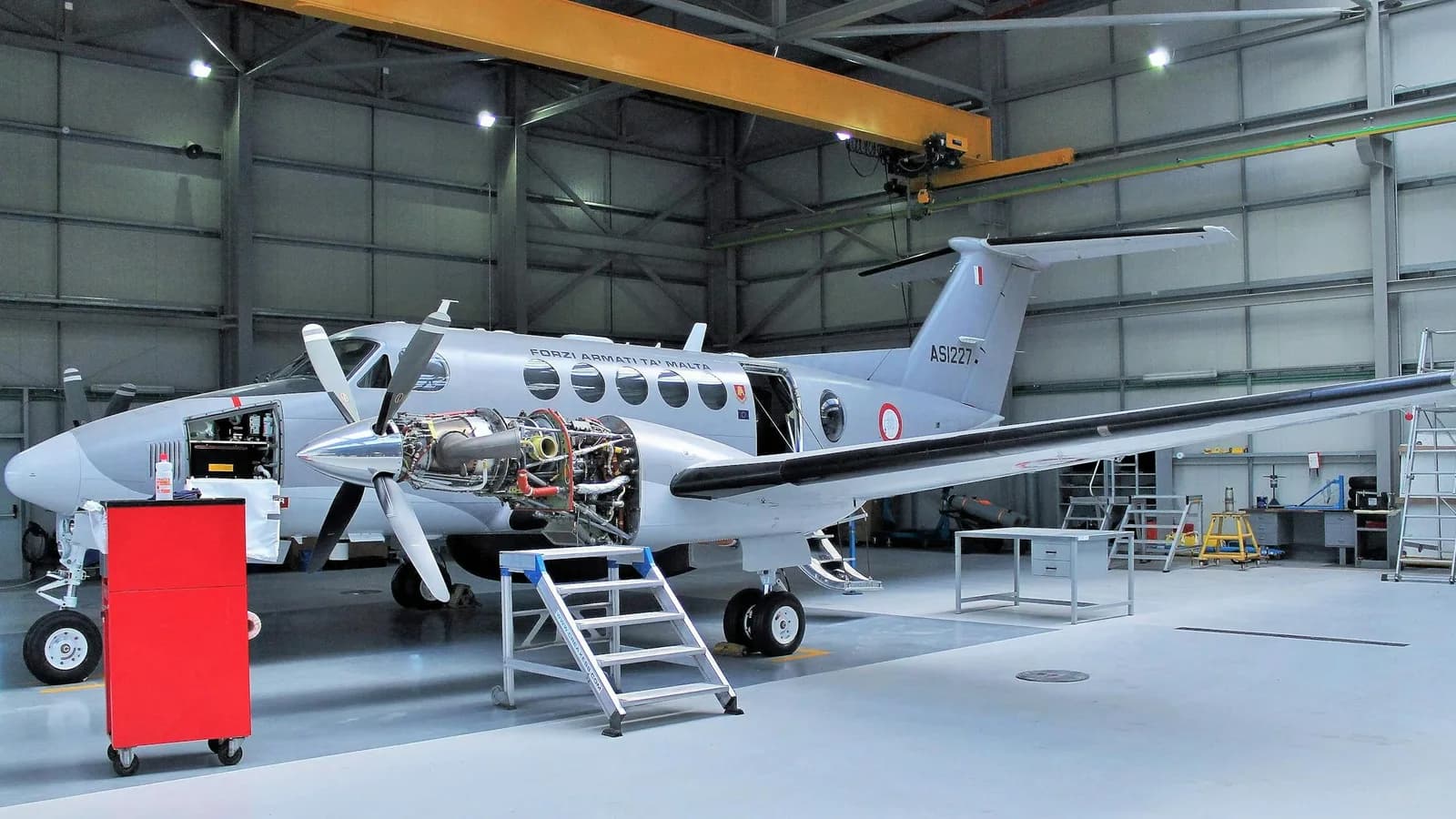
MRO Website Design built around how directors of maintenance, fleet managers, operators, and procurement teams actually decide.
MROs websites built to make maintenance enquiries and capability-list requests easier.
Tailored plan by email in 48 hours. No sales call required.
Part of
MRO Marketing
This is one of our specialist pages inside the wider mro marketing offering. If you need the full picture first, start there.
See the full mro marketing page →Quick answer
Why does an MRO website need separate AOG, PPI, and capability flows?
A dispatcher with an AOG aircraft at 22:00 needs a phone number and a response commitment in 90 seconds. A broker scoping a pre-buy on a 30-day LOI needs PPI methodology, records depth, and turnaround. A fleet manager planning a phase inspection 90 days out needs capability-by-airframe and OEM authorisation depth. Routing all three through a single "Contact Us" form loses all three because none of them gets answered.
Fit check
Is mro marketing with OTG the right fit for your operation?
Right fit
- Operators where mro marketing sits inside the priority commercial path — discovery flights, quote requests, owner acquisition, or RFQ-qualifying enquiries depending on sector.
- Teams who want a team that understands mro marketing regulatory and operational language without a translator — FAA Part 145, EASA Part 145, and CASA Part 145 depending on your market.
- Shops whose capability list is the product — airframe ratings, OEM authorisations, turnaround-time history — and needs to read that way on the page.
- Teams who want airframe-specific pages (Citation, Beechcraft, Pilatus, Dash 8, ATR — whichever your list supports) in front of maintenance buyers at the search stage.
Not the right fit if…
- Maintenance providers whose real constraint is hangar capacity or turnaround rather than visibility.
- Teams who need marketing measured on impressions or social followers rather than qualified maintenance RFQs.
Search journey
How aviation operators actually land on a mro marketing page.
Your customer doesn't search the way generalist agencies assume. They start with a regulatory or operational query specific to mro marketing, qualify you against one or two named competitors, then look for proof you've worked with an operator that looks like them — in that order.
Start broad
MRO Marketing
Most operators begin on the wider sector hub first, then narrow into the exact page type that matches the search they trust most.
Common searches
What usually gets compared next
These are the recurring problems, use cases, and intent patterns we see before someone commits to a page like this.
Adjacent pages
Pages they compare before enquiring
A serious reader usually moves laterally across the closest adjacent pages before deciding which route to pursue.
Conversion step
What moves them to contact
Once the fit is clear, they usually check scope or ask for a proposal tied to the exact page they landed on.
The problem
Why mro marketing pages stop generating enquiries.
A fleet manager evaluating an MRO has a binary checklist: do they have the capability for my airframe, do they hold the OEM authorisation I need, what is the realistic turn time, and what is the records output. Most MRO sites bury the answer to all four under a "Capabilities" PDF download — losing the fleet manager before they ever request a quote.
AOG dispatchers do not fill out forms. An aircraft on ground at 22:00 with a transient crew and a $30K-per-day downtime cost needs a phone number, a response-time commitment, and a confirmation that you can dispatch a mobile team to the field — surfaced in the first screen of an AOG-specific landing page.
PPI customers (brokers, acquisition consultants, and the owners they represent) need a methodology page that proves you can deliver a clean pre-buy report on the LOI timeline — not a generic services page. Most MRO sites do not have a PPI page at all, and the PPI work goes to whichever shop has clearer methodology documentation.
OEM-authorisation depth is hard to verify visually on most MRO sites — a Cessna Citation operator wanting to confirm CJ3 vs Citation X coverage by maintenance phase has to read three pages and an unsupported PDF. A capability-by-airframe matrix with named OEM authorisations per model closes that gap.
What we build
What we actually build for mro marketing operators.
Build a capability-by-airframe page per model — Citation CJ1/2/3/4, Citation X/XLS/Sovereign/Latitude/Longitude, King Air 90/200/250/300/350/360, Pilatus PC-12, Falcon 900/2000/7X/8X, Gulfstream G200/280/450/550/650, Embraer Phenom 100/300, Legacy 450/500, Bombardier Challenger 350/650, Global 5000/6000/7500 — naming the work scopes, OEM authorisation depth, and turn-time benchmarks.
Stand up an AOG-response landing page with response-time SLA, geographic coverage radius, the dispatch phone number in 24-point type, mobile field-team scope, parts-AOG capability, and a single-field "tail number + airport" enquiry input — designed for a dispatcher, not a marketer.
Build a PPI methodology page tuned to broker workflow: phase-by-phase inspection scope by airframe, records review depth (ATP/FlightDocs/CAMP/Veryon integration), borescope inclusion by engine, structural sampling protocol, deliverables format, turnaround time aligned to a typical LOI window.
Surface OEM-authorisation depth on a dedicated authorisations page — Cessna Citation Service Center status with model coverage, Pilatus Authorized Service Center, Daher TBM Service Center, Beechcraft Authorized, Embraer Authorized, Honeywell, Garmin, Collins, Pratt & Whitney Canada Designated Overhaul Facility — each with the named work scope and warranty coverage explicit.
Add a capability-list request form distinct from the AOG and PPI flows — a fleet manager scoping a phase inspection 90 days out has different questions than a broker scoping a PPI on a 30-day LOI or a dispatcher with an AOG aircraft.
Next step
Want a plan without a sales call?
Tell us about your current site, who you want to reach, and what you actually sell. We'll come back with a tailored plan within 48 hours — no call required.
Request Proposal →How it works
From brief to qualified mro marketing enquiries.
No discovery call to start. You tell us the operation; we map the search landscape, build the pages and enquiry path, instrument the conversions, and report on enquiries — not impressions.
Map the opportunity
We audit your current site and search landscape against the operators already winning your terms, then agree the pages and quick wins that matter first.
Build the pages + funnel
Sector-specific landing pages, the enquiry path, and the proof a serious operator checks before they make contact — built to convert, not only to rank.
Instrument the enquiries
Search Console and GA4 wired to the actions that matter — proposal and audit requests — so the work is measured on qualified enquiries, by cluster.
Report on what converts
Monthly reporting that explains lift per page and per enquiry path, so spend follows what is actually producing customers.

Proof
See the work we've shipped for operators like you.
Part 145 + airframe-rated page architecture
MRO SEO timelines run 4-8 months for competitive aerospace terms per the FAQ on this page. Until a named MRO client AOG-response or turn-time number can anchor proof, this page leads with what MRO buyers verify first: capability and approval fluency.
Services
Services we usually pair with this.
Keep reading
Where aviation operators usually go next.
Frequently Asked Questions
What operators usually need answered before they enquire.
A PDF download buries the capability evidence behind a click and a wait. A page Google can find, one per airframe (Citation CJ3, King Air 350, Pilatus PC-12, Falcon 2000, Gulfstream G450, Embraer Phenom 300), ranks for the airframe-specific queries fleet managers actually search, and it lets them confirm operational fit without leaving the page. The PDF stays as the leave-behind; those pages do the search-conversion work.
Phone number in the largest type on the page, response-time SLA explicit, geographic coverage radius shown on a map, mobile field-team scope and parts-AOG capability listed, a single short-form input ("tail number + airport") that triggers a callback, and a quiet visual treatment that signals operational seriousness. AOG decisions happen in single-digit minutes — every extra click costs the work.
Yes — and specifically by model coverage, not as a generic logo wall. A Pilatus PC-12 operator confirming Pilatus Authorized Service Center status wants to see model coverage, warranty work scope, and the engine authorisation (Pratt & Whitney Canada PT6A). A Citation operator confirming Cessna Citation Service Center status wants the CJ-series and Citation X/XLS coverage explicit. Logo walls without model-by-model breakdown do not move the operator-fit decision.
Publish a number range by work package. Maintenance directors do downtime maths: every extra hangar day is a day not flying. "Fast turnaround" says nothing; "most King Air 350 phase 1-4 inspections run 5-8 working days, no-surprise findings" lets them plan a slot and trust the shop that was specific. Pair it with how you handle out-of-scope findings: quoting additional work fast, sourcing AOG parts mid-check, records staying pre-buy-ready. Documented turn-time honesty wins the scheduled work.
Ready To Grow?
Want a page like this — but for your mro marketing?
We'll audit your current mro marketing pages against the operators ranking above you, identify the keyword + proof gaps, and send back a 48-hour proposal with scope, priorities, and price. No discovery call required.