How Flight Schools Turn Discovery Flights Into Enrolments
Most Australian flight schools go quiet once the discovery flight lands. Here is the follow-up sequence that turns paid leads into enrolled students.
The aircraft rolls to a stop, the engine cools, and the prospect steps out smiling. For most flight schools, that is where the story ends. The discovery flight is treated as the sale itself, and the follow-up stops the moment the propeller stops turning. That is the mistake.
Our hypothesis is simple: the discovery flight is not the sale. It is the start of a fourteen day window in which a lead you have already paid to acquire either becomes an enrolled student or fades into a list of missed opportunities. The schools that convert are not necessarily spending more on advertising. They run a defined sequence after the flight: same-day contact while the experience is still fresh, a price-path email that names the true cost of a licence, a ground-school preview, and a second-booking offer before day 14.
This post walks through that sequence step by step. We cover why schools go quiet and where the marketing funnel breaks, the four steps across 14 days, what to set up before your next discovery flight, how to measure the numbers that matter, the mistakes that break the sequence, and what to do next week.
The Discovery Flight Is Not the Sale
A discovery flight costs a flight school more than the flight itself. It occupies an aircraft slot, an instructor hour, insurance cover, and advertising spend used to fill the seat. Our position is simple: the days after the flight decide whether that already-spent money becomes an enrolled student or a write-off. That is what most schools leave to chance.
We should be honest about the evidence. The claim that many schools go quiet after the flight is our view and an observed pattern, not an Australian industry statistic. Treating it that way matters: test it against your own enquiry data rather than assuming a benchmark applies.
A discovery flight is the middle of the purchase, not the finish line. It should trigger tasks, not close a file. Over the next sections, we set out four steps across 14 days, each with a timing, an owner, a message and a purpose.
Why Schools Go Quiet: Where the Marketing Funnel Breaks
If the discovery flight sits in the middle of the purchase, the next question is where the path breaks. A marketing funnel is the path a person walks from first hearing about your flight school to paying for lessons, and each point where they can quietly drop out. What we see is consistent: enquiry answered, discovery flight booked, flight flown, then nothing. In most schools we audit, the booking system schedules no task after landing and no instructor is briefed to follow up, a pattern rather than a statistic, so test it against your own data. Silence from a prospect rarely means a definitive no. Our observation is that they are still deciding, comparing options across two or three schools, but treat that as a working assumption until you test it with your own enquiry records. Schools then buy more leads to fix the gap. That is the expensive way, because leads already paid for were never worked. In many schools the instructor flies, the office invoices, and nobody owns the 14 days that follow. That break is what the next four steps address.
The Sequence at a Glance: Four Steps Across 14 Days
As set out above, the discovery flight triggers four follow-up steps in order. Order and timing matter: in our view, sending all four at once turns a sequence into a noise event. That is an operating principle, not a published benchmark.
Same day. The instructor who flew with them makes personal contact, hours after landing, while the flight is the freshest thing in the student's memory.
Within 48 hours. A price-path email sets out the true cost of a licence as stages, not one intimidating number. It must be accurate and not misleading under Australian Consumer Law.
In week one. An invitation to sit in on a ground school session, so the prospect meets the classroom and the theory before committing money.
Before day 14. A second-booking offer with two named dates and one obvious next action.
What to Set Up Before the Next Discovery Flight
Set these five things up once, before the next discovery flight, and the sequence runs without you chasing it.
One owner, one backup. If the owner is in the air, the backup sends the same-day message. Otherwise follow-up stalls whenever the owner flies.
Four facts at booking. Name, suburb or city, licence goal, and whether they have thought about a medical or a budget. These drive every later message.
Templates in your email tool. Write the four messages once, then store them where the school already sends email. An instructor's drafts folder is not a system.
One pricing rule. Name who may quote price and how, so two students comparing notes hear the same numbers.
Permission at booking. Tell the student follow-up is coming and record that consent with their details. Australia's privacy rules, specifically APP 5 under the Australian Privacy Act, are designed to ensure people know why their information is being collected and how it will be used; retrieve the full OAIC guidance at the linked page and confirm your obligations before finalising your booking form.
None of it is complex. It just has to exist before the next flight.
Step 1: Same-Day Contact, While the Flight Is Still Fresh
With the owner and templates in place, the clock starts the moment the wheels stop. Send the first message the same day, ideally within hours. Our experience is that contact is most effective the same day, while the flight is still the most recent thing the student has done.
Keep it personal and brief. Mention something specific from the flight, such as the first turn or the landing, and name the instructor who flew with them. Open with that detail, not a generic thanks for flying with us.
Pick one clear next action rather than three: invite a reply, promise a call back at a time you name, or link to book the next lesson.
Use the channel they booked through, usually a text message. If you also email, make sure replies reach a real person, not a no-reply address. The shortcut that undoes this step is a bulk newsletter to everyone who flew that week. It reads as automated and gets skimmed past. Tomorrow, the money question arrives.
Step 2: The True-Cost Email and the EDM Marketing Behind It
Next comes the message most schools never send. EDM marketing means email direct marketing: a planned series of emails to a list the school owns, sent on a schedule, not a one-off blast when someone remembers.
We recommend sending it within 48 hours. Structure the price as a path, not a lump sum: what each stage costs and includes, and where the student's own pace changes the total. Name every mandatory cost item and say how payment can be spread.
Accuracy is not optional. A true-cost email must not mislead under Australian Consumer Law; revealing mandatory fees only later misleads even when the final price is technically correct. Hiding landing fees, exam fees or membership charges is worse than sending nothing.
This email has one job: answering the money question. Booking prompts and ground school invitations belong in the messages that follow.
Step 3: Let Them Sit In on Ground School
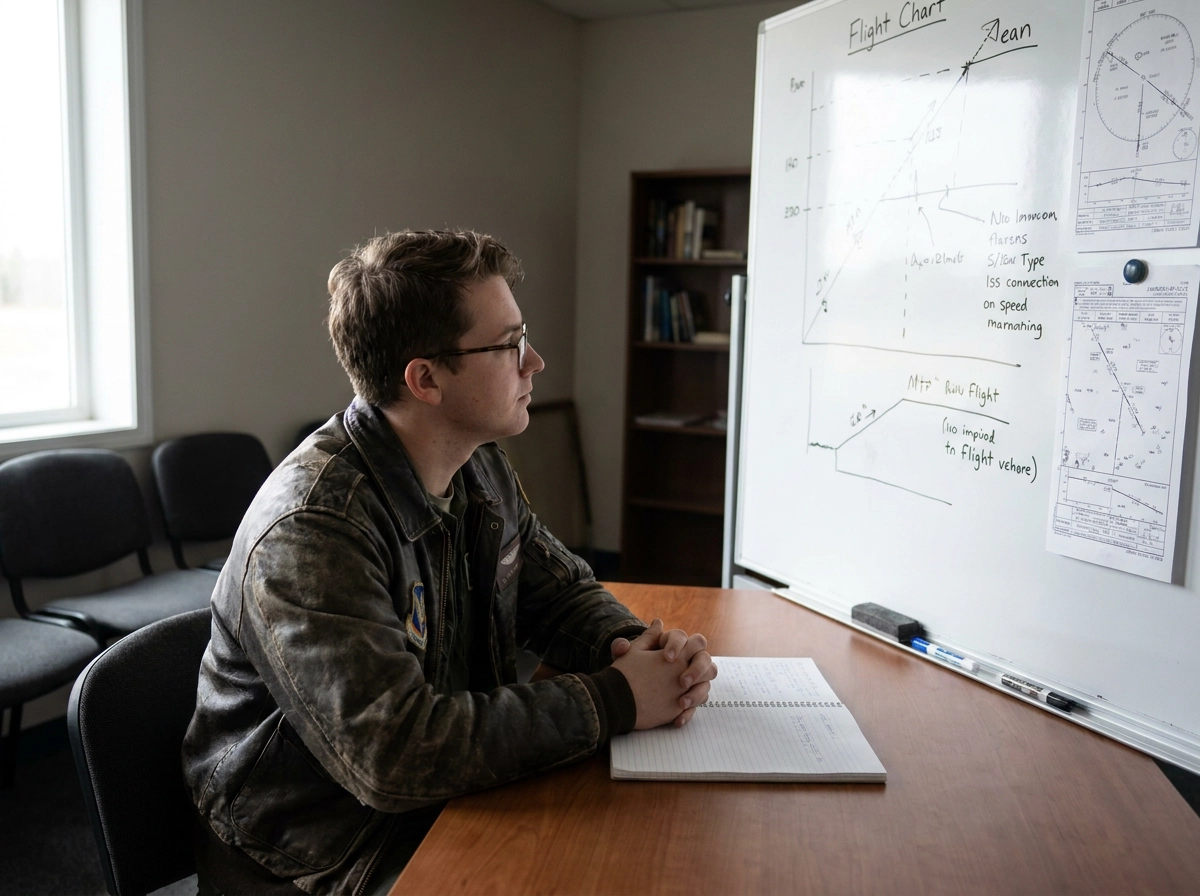
The true-cost email answered the money question. The next hesitation is almost always theory. Invite them to observe one session in their first week: a ground school class, a pre-exam briefing or an online theory session are all worth trying, confirm with your operations and CASA requirements which formats are available to non-enrolled visitors before you publish the invite.
Theory is the part of training new students cannot picture. In our experience, sitting through one real class addresses the objection we hear most: "I'll never pass the exams."
Keep the ask small and dated. Give one session, with a time and a location or a join link, and say plainly that there is no payment involved.
We treat attendance as one of the strongest signals in the sequence. Someone who gives up an evening for ground school deserves a phone call from the instructor, not another email.
Where you can, add a light social element. Seat the visitor with current students. It shows a school with people in it, not a hangar and an invoice.
Step 4: Offer a Second Booking Before Day 14
By now the student has sat in on ground school. The next move is a second booking, sent before day 14. Offer two named dates and times, not an open 'let us know when you are free'. Match the offer to the person: a second lesson if they have decided, a ground school plus simulator session if they are hesitating, or a payment-options conversation if price is the sticking point. Remove friction: one booking link, a clear line on whether a deposit is required, and simple terms for changing or cancelling. If the email goes unopened or unanswered, call once. If that fails, stop and move them to a longer-term nurture list, provided they have given express consent under the Spam Act. Schools with a charter arm should route other flying enquiries to a quote and availability tool such as FlightQuote, so those requests do not sit in the same unattended inbox. With the second booking offered, the next task is measuring whether the sequence worked.
Measuring the Sequence: The Numbers to Watch
Once the second-booking offer has gone out, the only question that matters is whether the sequence moved anyone from a flown discovery flight to a paying student. Track lead to enrolment, not email opens: the clock starts at the discovery flight booking and finishes at a paid lesson or a signed training agreement.
Count each handover as it happens: how many flew, how many received same-day contact, how many attended ground school, how many rebooked, how many enrolled. Break those numbers down by instructor and by front desk shift. Follow-up failures usually sit with one person or one roster gap, not the whole school.
Switch the sequence on for a set period and compare before and after, accepting that seasonal demand can skew a short window. This is our hypothesis, not a published benchmark, so prove it in your own operation.
Mistakes That Break the Sequence
Measurement tells you where the sequence leaks. These five mistakes cause most of those leaks.
Sending all four messages in one burst. Four useful steps become one overwhelming block of text, and nobody reads it.
Letting price vanish from the conversation. Silence on cost sends the student online to guess and compare, and they decide without you in the room.
Handing follow-up to whoever is free. Tone, timing and accuracy change with every shift, and two students can be quoted two different numbers.
Waiting for the student to make the first move. Silence usually means nobody gave them a next step, not a no.
Assuming the discovery flight was the sale. This is the single assumption the sequence exists to correct. The flight opens the purchase; it does not close it.
What to Do Next Week
Those mistakes are fixable, and next week is when to fix them. Before you touch anything else, fix the fourteen days. Name one owner, write the four messages, and send them on the days set out. Treat ground school as the bridge between a fun flight and a paid course. Measure lead to enrolment for one month as set out above. If you would rather not guess, Meet Off The Ground Marketing. Our team audits existing post-discovery-flight follow-up for Australian flight schools and shows you exactly where the drop-off is happening.

Conclusion
A discovery flight does not close the sale. It opens the door. The sequence is straightforward: the fourteen days after the flight are the work. Make your next discovery flight the start of a pilot's journey, not a missed opportunity.
Aviation Marketing Notes
One operator-shaped read per week. No agency newsletter padding.
Joey shares the patterns we see across flight school, charter, MRO, and FBO clients. Practical. Aviation-specific. Unsubscribe whenever.