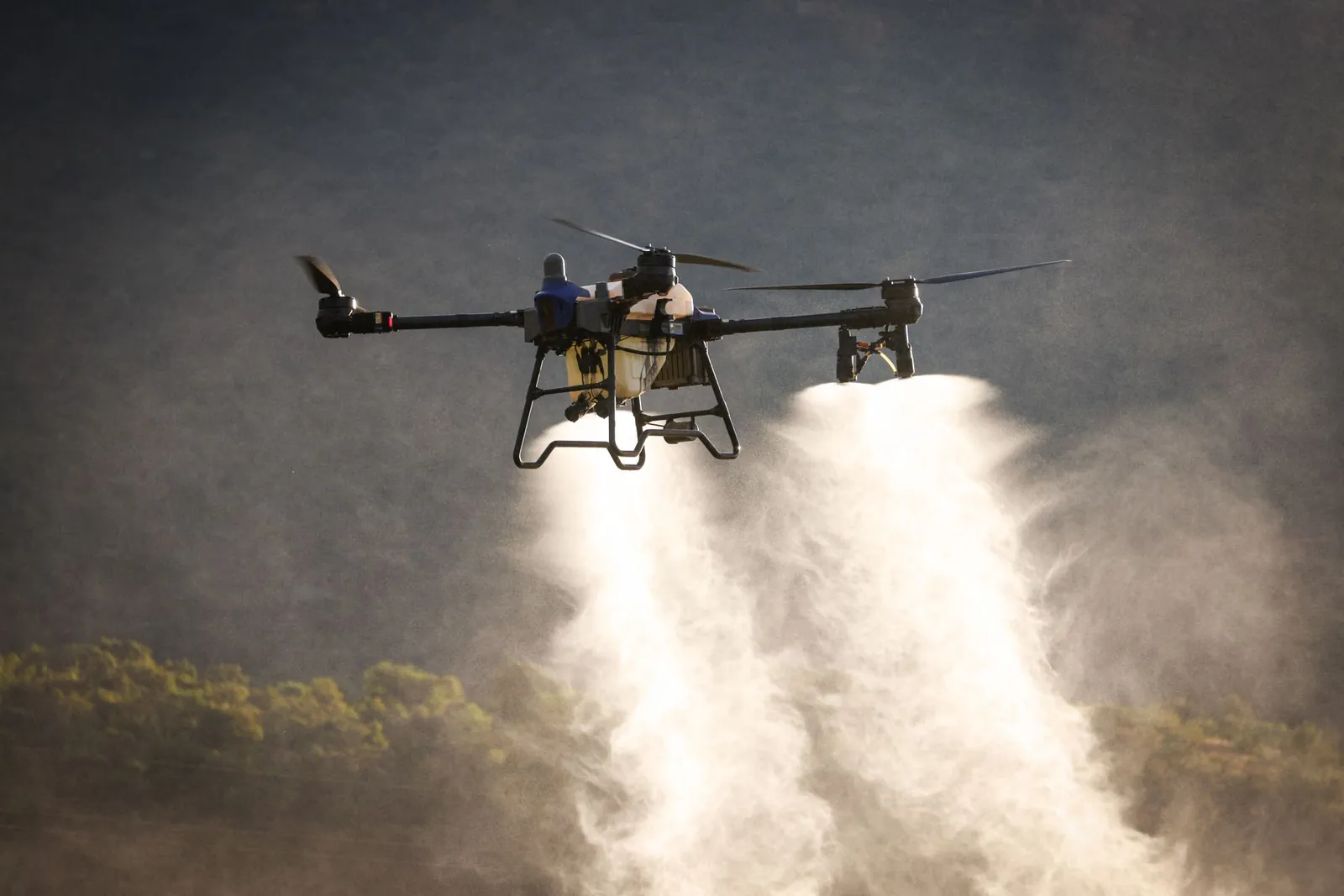

Commercial drone work has moved well past aerial photography. Inspection, survey and mapping, utility and energy work, agriculture and public safety now account for much of the serious demand, and the buyers are facility managers, engineers, utility asset teams and procurement departments. They buy outcomes: a defect report, a survey-grade map, a stockpile volume, a safer way to look at a structure.
Most drone businesses still market themselves like photographers. This playbook is about marketing like an aviation service company instead. Our drone services marketing page covers how we do that work for operators.
Why Most Drone Businesses Struggle to Win Commercial Work
The usual pattern: an operator earns a remote pilot certificate, buys a capable aircraft, builds a quick website with a showreel, lists on a few marketplaces and runs some social ads. Months later they are competing on price against other operators with the same aircraft and the same showreel.
The service is rarely the problem. A thermal roof inspection or a volumetric survey can save a client real money and real risk compared with scaffolding, rope access or a ground survey crew. The problem is that the people who buy those services cannot find the operator, or find them and cannot tell whether they are legal, accurate and insured.
The fix is positioning. Stop selling flights and footage. Sell the inspection report, the map, the measurement, and the credentials that make it safe to hire you.
Show Credentials Like an Aviation Business
Enterprise buyers worry about three things: is this legal, is this accurate, and is it cheaper or safer than the way we do it now. Your website should answer all three quickly.
Legality. In the US, that starts with FAA Part 107 remote pilot certification for every pilot, and any waivers you hold for beyond visual line of sight, night operations or flight over people. If you operate abroad, state the equivalent: an EASA operational authorization in Europe, or a CASA ReOC in Australia. Say what you hold, not what you hope to hold. The FAA's work on routine BVLOS rules is a real shift for the industry, so if you have BVLOS approval or experience, put it where buyers will see it.
Accuracy. Publish sample deliverables: an orthomosaic, a point cloud, a thermal report excerpt, a defect log. State the accuracy you work to and how you control it (ground control points, RTK or PPK).
Cost and safety. Compare with the traditional method in plain terms: no scaffolding, no rope access team, no lane closure, a shorter site visit. Use your own job records for any numbers you quote.
Insurance details and your safety procedures belong on the site too. Procurement teams will ask for them anyway, and showing them early removes a reason to pick someone else.
Build Service Pages Around What Buyers Search For
Commercial buyers search for the job, not the aircraft. "Drone roof inspection," "drone land survey," "solar farm thermal inspection" and "powerline drone inspection" are the kinds of searches that lead to work. "Drone photography" mostly leads to hobbyists and weddings.
Give each service its own page:
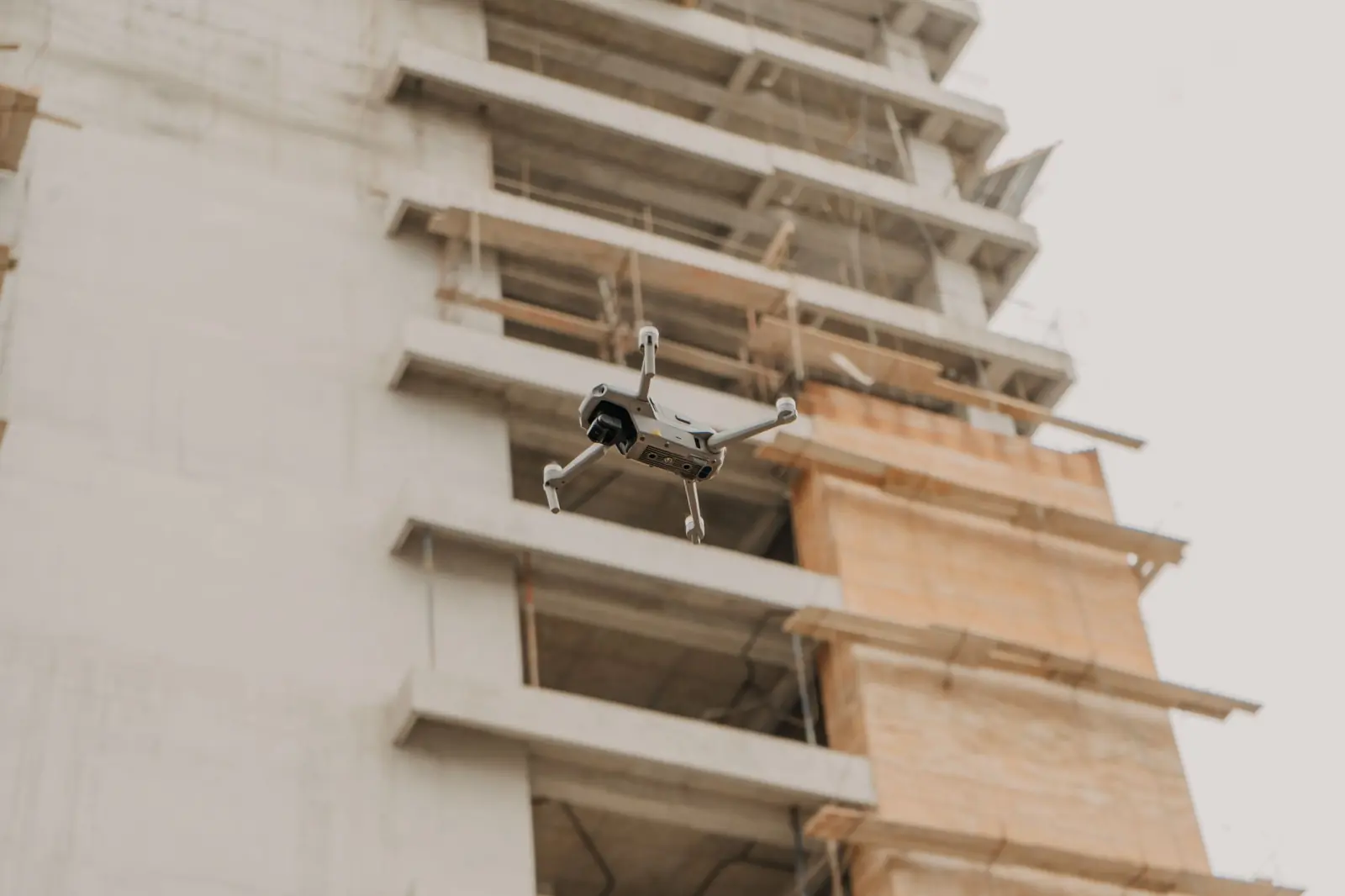
- Inspection: roofs, facades, bridges, towers, tanks, confined spaces
- Survey and mapping: topographic surveys, volumetrics, construction progress, LiDAR
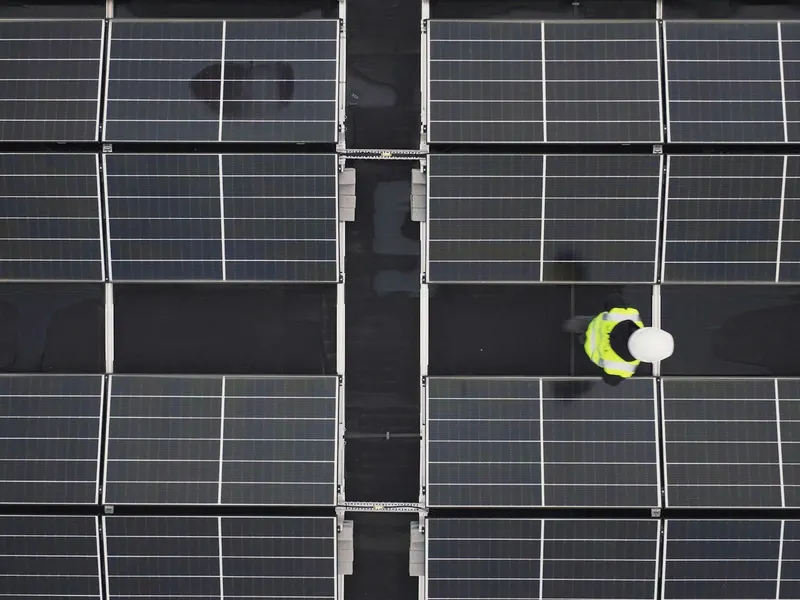
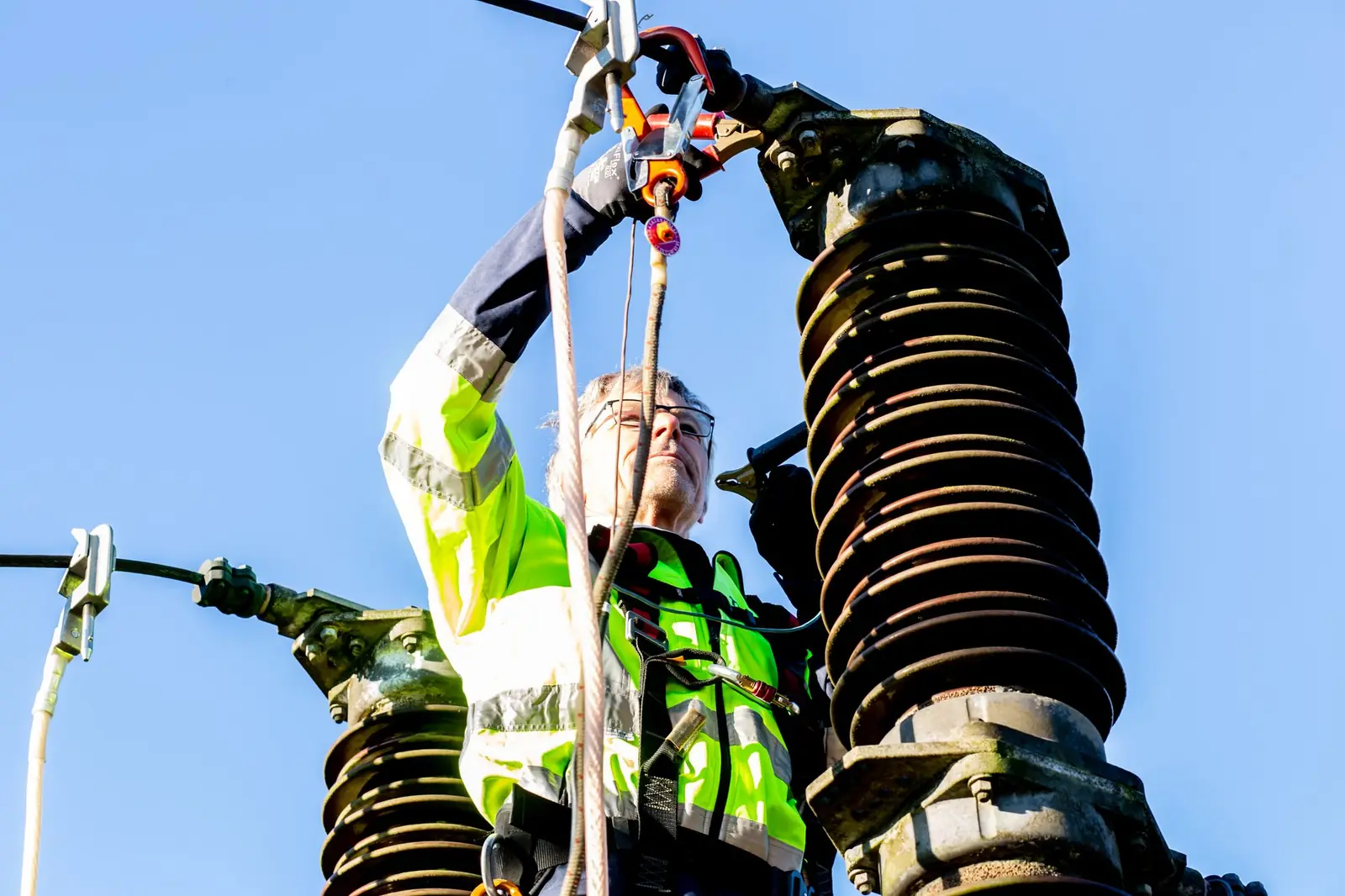
- Utilities and energy: powerlines, substations, solar farms, wind turbines
- Agriculture: crop health mapping, spraying where you hold the approvals
Each page should name the deliverable, the accuracy, the typical turnaround, the industries you serve and the area you cover, with real project photos and a quote button. Add structured data that describes the service, the area served and your credentials, so search engines and AI assistants can understand and quote the page.
Support each service page with a few articles that answer the questions buyers ask before they call: what a thermal roof inspection can and cannot detect, how drone survey accuracy compares with a ground crew, how to prepare a site for a flight. Link each article back to its service page.
Paid Search: Narrow and Local
Google Ads can work well for drone services because many operators either do not advertise or bid on the wrong terms. The discipline is in keeping it narrow:
- one ad group per service, each sending traffic to the matching service page
- tight location targeting to the area you can actually serve
- negative keywords for drone sales, drone training, hobby flying, jobs and photography
- call extensions, because many facility managers would rather phone
Track quote requests and calls from each ad group. Cost per click is a poor guide on its own; cost per quote request and cost per job won tell you what is working.
Social Proof That Speaks to Engineers
Social media for a drone business should prove technical depth, not chase likes.
- LinkedIn is where facility managers, engineers and asset owners are. Post short project write-ups: the problem, the method, the deliverable, and the result in plain language, using real figures from your own jobs and only with the client's permission.
- Video works when it shows the deliverable as well as the flight: the thermal anomaly, the map overlay, the volume calculation.
- Industry commentary on regulation, such as BVLOS rule changes or new waivers, shows buyers you follow the parts of the industry that affect their projects.
A Website That Turns Visits Into Quote Requests
Once the right people arrive, the site has to make the next step easy:
- One page per service, not everything on a single "services" page.
- Real project examples with the deliverable, the method and a plain-language result.
- Credentials visible on every service page: remote pilot certification, waivers, insurance.
- A quote form that asks the right questions: site address, service, scope and preferred dates, with an option to upload site plans.
- Fast replies. Enterprise buyers often ask several operators at once. The one that responds clearly and quickly gets the first real conversation.
For larger contracts, our enterprise drone company marketing playbook covers what procurement teams check before an RFP is even written.
Key Takeaways
- Position as an aviation service, not a photography provider. Buyers want reports, maps and measurements.
- Lead with credentials: FAA Part 107, waivers including BVLOS, insurance and safety procedures, plus international equivalents if you work abroad.
- Build a page per service that names the deliverable, accuracy, turnaround and area served.
- Keep paid search narrow and local, with negatives that keep out hobbyists and job seekers.
- Measure quote requests and jobs won, not followers or clicks.
Next Step
If you want to know how your drone business shows up when a facility manager or engineer goes looking, start with the AI Visibility Audit. We check search and AI answers for the services and regions you cover and show where inquiries are leaking. If you are ready to build this out, request a proposal with your services, credentials and service area, and we will reply with a written scope. The full program is on our drone services marketing page.