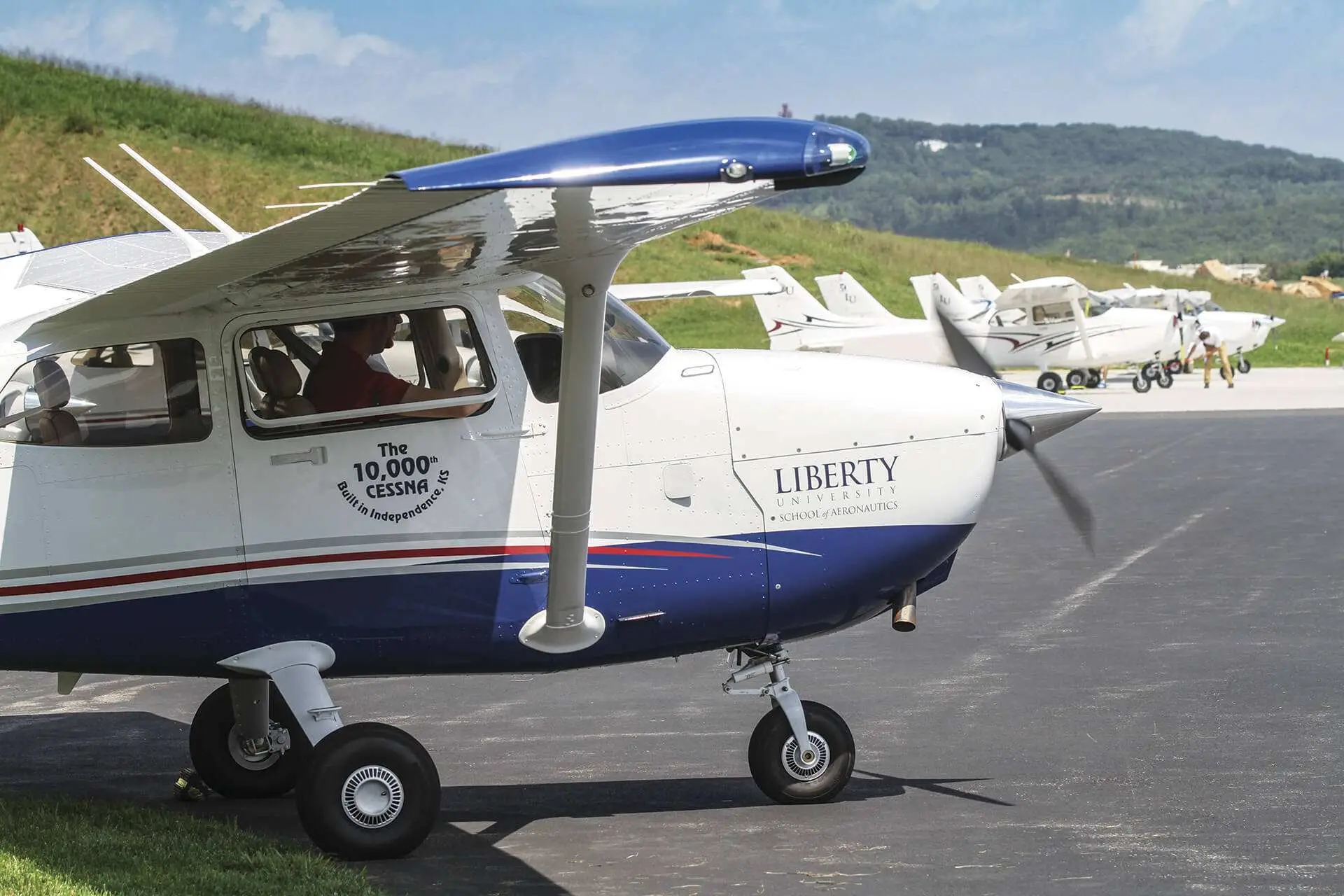
Running a flight school requires constant balance across aircraft utilization, instructor availability, maintenance cycles, and student throughput. When training aircraft sit parked on the ramp or flight instructors spend hours waiting in the briefing room, fixed overhead quickly drains operating margins.
Yet many flight training academies struggle with inconsistent student volume. When student starts drop, operators often blame local demographics or airline hiring cycles. In reality, the failure is almost always structural: the school treats student acquisition as an informal, ad-hoc task rather than a disciplined operational pipeline.
Generating a predictable flow of committed student pilots requires aligning your digital presence with how candidates actually research, finance, and commit to flight training.
1. The Commercial Reality of Student Pilot Lead Generation
Student pilot prospects divide into two distinct buyer profiles, each requiring a separate acquisition workflow:
- Career-Track Commercial Students: Candidates pursuing an integrated Commercial Pilot Licence (CPL), Multi-Engine Command Instrument Rating (MECIR), or Flight Instructor Rating (FIR). These buyers evaluate syllabus structure (Part 141 vs Part 61), airline pathway partnerships, fleet modernization (such as Garmin G1000 avionics), student housing, and financing options. Their lifetime student value frequently exceeds $80,000 to $120,000.
- Recreational and Private Pilot Candidates: Business executives, professionals, and aircraft owners seeking a Private Pilot Certificate (PPL) or Recreational Pilot Certificate (RPC). They evaluate proximity to their residence, instructor continuity, scheduling flexibility via online booking portals, and dispatch reliability.
Treating these two groups with identical marketing messaging dilutes conversion. A career candidate looking for structured airline preparation will disregard an academy that markets discovery flight gift vouchers like carnival rides. Conversely, a busy professional seeking a weekend private pilot rating will abandon an application process that demands immediate full-time ground school commitments.
Structuring your acquisition engine around these distinct pathways is the foundation of our work in /flight-school-marketing and /services/seo.
2. Capturing Local Search Intent in Your Airport Catchment
Flight training is fundamentally a location-bound purchase. Over 85 percent of student pilots train at an airfield within a 45-minute drive of their home or workplace. When an aspiring pilot decides to investigate flight training, their research begins with geographic queries:
- "flight school near me"
- "private pilot training Archerfield"
- "learn to fly Cessna Seattle"
- "commercial flight school Brisbane cost"
If your flight school website fails to appear in the Google local 3-pack or ranks below unverified regional directories, you forfeit high-intent candidates to competing schools on the field.
Key Local SEO Infrastructure for Pilot Academies
- Google Business Profile Rigor: Maintain accurate primary categories ("Flight School"), airport terminal physical addresses, operating hours, and photo uploads showcasing real training aircraft, briefing rooms, and student first-solo milestones.
- Airport and Catchment Landing Pages: Build dedicated landing pages optimized for surrounding metropolitan suburbs and feeder towns, detailing runway configurations, airspace classifications (Class D/C/G), and typical transit times.
- Syllabus and Rating Silos: Create individual pages for each certification—Recreational, Private, Commercial, Multi-Engine, Instrument, and Flight Instructor—rather than grouping all training under a broad services menu.
Connecting local search optimization with targeted paid media campaigns through /services/ppc ensures complete search dominance during peak seasonal enrollment periods.
3. High-Converting Web Architecture: Qualification Over Vanity Volume
Most flight school websites suffer from one of two flaws: they either withhold critical training details and force visitors to submit a blind contact form, or they bury visitors under dense regulatory PDFs and outdated ground school schedules.
High-converting website architecture balances operational transparency with clear qualification pathways, built to the performance standards detailed in /services/website-design:
The Three Essential Website Elements
- Realistic Cost Disclosures: Provide transparent itemized breakdowns of flight hours, dual instruction rates, solo aircraft hire, briefing charges, and CASA/FAA examination fees. Flight schools that hide pricing lose credibility; operators that present clear figures earn buyer confidence immediately.
- Interactive Flight Cost Calculators: Allow candidates to calculate training investments based on realistic completion averages (such as 55 to 65 hours for PPL rather than the regulatory minimum of 40 hours). This pre-qualifies applicants financially before they interact with your chief flight instructor.
- Dedicated Fleet Specifications: Detail your training fleet with real cockpit photography, avionics suites (analog vs glass cockpit), and engine specifications. Highlight safety maintenance protocols and maintenance facility standards (interlinking with specialized /fbo-marketing infrastructure).
4. The Discovery Flight: Turning Trial Lessons into Enrolled Students
The discovery flight or Trial Introductory Flight (TIF) is the single most valuable conversion asset in flight training. Yet many operators treat trial flights as one-off joyflights, collecting a small fee and allowing the student to walk away without a structured follow-up.
When properly engineered, trial flight conversion rates routinely exceed 35 percent.
The Four-Stage Discovery Flight Conversion Protocol
| Protocol Phase | Operational Action | Conversion Outcome | | :--- | :--- | :--- | | Pre-Flight | Send digital briefing pack, runway map, and flight preparation video | Reduces no-show rates to <3% | | Briefing Room | Review flight controls, weather, and training objectives; hand student a pilot logbook | Establishes professional instructor relationship | | In-Flight | Allow student hands-on stick-and-rudder time during climb, turns, and descent | Ignites direct visceral flying motivation | | Post-Flight | Log first 0.8 hours in their new logbook; review syllabus pathway and schedule Lesson 2 | Secures immediate second booking |
By presenting the prospective aviator with a physical or digital logbook containing their first official flight entry, the experience transitions from a novelty joyride into the opening lesson of a structured aviation career.
5. Automated Lead Nurturing and CRM Cadence
Flight training decisions carry long evaluation windows. A student pilot often spends six to twelve months between their initial discovery flight and full syllabus commitment while arranging personal finances, work schedules, or medical certificates.
If your administration team relies on sticky notes or manual inbox reminders, prospective students slip through the cracks. Deploying automated CRM follow-up sequences ensures consistent contact:
- Day 1: Post-flight recap email with in-cockpit photo, instructor notes, and flight syllabus guide.
- Day 4: Practical advice on obtaining a Class 1 or Class 2 aviation medical certificate and selecting an Aviation Medical Examiner (AME).
- Day 10: Case study or graduate interview detailing training timelines and career placement outcomes.
- Day 21: Invitation to an upcoming academy open day or weekend ground school theory seminar.
Schools that systematically deploy this structured acquisition architecture keep training aircraft flying, minimize unbillable instructor downtime, and build sustainable enrollment volume.
Request an Aviation Marketing Proposal
If your flight school or pilot academy seeks to increase student starts, improve discovery flight conversion rates, and build a predictable student pilot acquisition pipeline, Off The Ground Marketing engineers search and digital systems designed specifically for aviation operators.
Contact our team to evaluate your airport search footprint and student intake funnel:
- Primary Action: Request an Aviation Marketing Proposal
- Diagnostic Option: AI Visibility Audit ($497)
- Explore Capabilities: Flight School Marketing | Aviation SEO | Aviation Website Design | Aviation PPC