We worked with a utility drone operator a while back who had a genuinely impressive track record. Powerline corridor inspections across hundreds of kilometres of transmission line. Substation thermal surveys that caught failing components before they became outages. Vegetation management surveys that mapped encroachment along right-of-way corridors with enough precision to feed directly into a clearing contractor's work orders.
None of that was visible on their website.
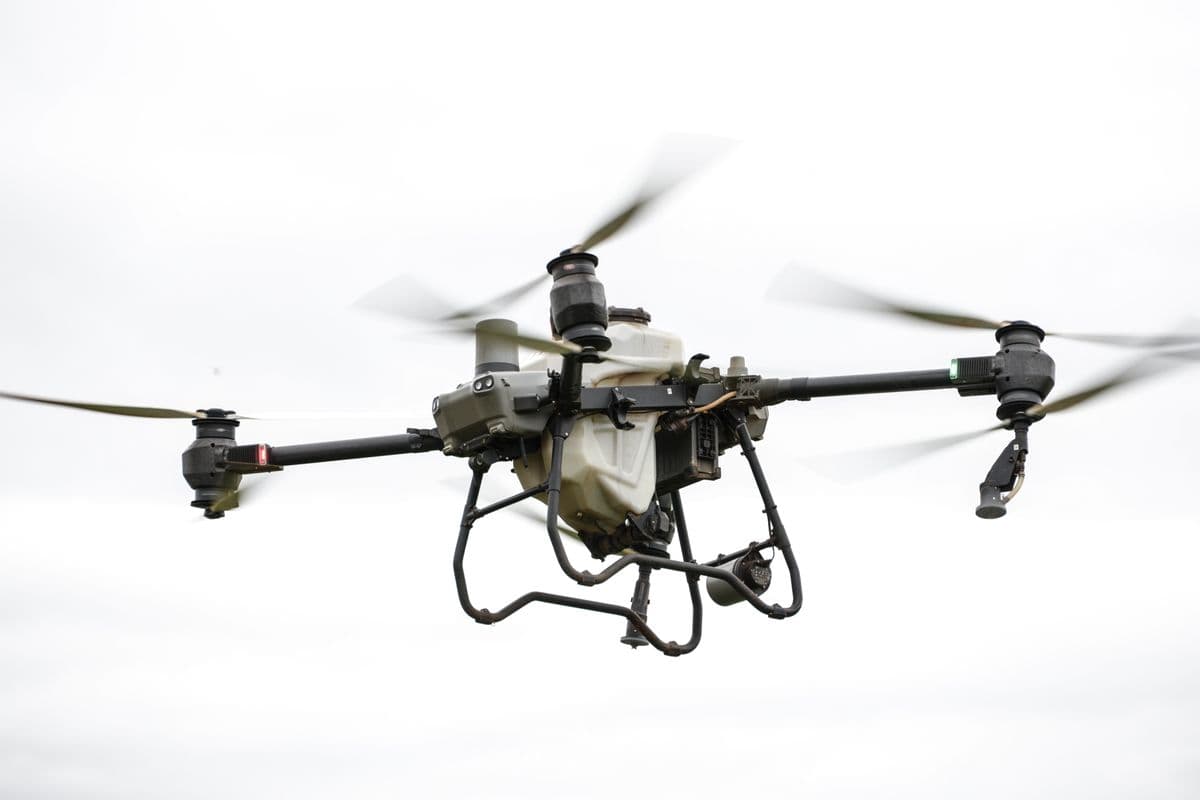
What was visible was a homepage that said "Professional Drone Services" with a photo of a quadcopter and a contact form. It read like it was written for someone shopping for aerial photography — which is the opposite of who was actually hiring them.
If you are running a utility drone operation and trying to build an enterprise pipeline, the gap between what your site says and what your buyer searches for is probably wider than you think. Our utility drone marketing page covers the commercial side of this in detail, but the core issue deserves a deeper look because it affects almost every utility UAV operator we have reviewed.
Want an aviation marketing specialist to look at your site and see where utility procurement teams are dropping off? Get a free aviation marketing audit — we only work with aviation businesses.
Who Is Actually Hiring You
The person signing off on a utility drone contract is not a drone enthusiast. They are an asset manager, a maintenance planner, a procurement officer, or a compliance lead at a network operator, utility company, or infrastructure owner.
They do not care what aircraft you fly. They do not care about your camera resolution or your flight time. They care about three things:
- Can you deliver the data in a format my team can use? A thermal inspection report that arrives as a PDF with annotated hotspots and GPS coordinates is useful. A folder of raw FLIR images is not. The deliverable format is the product, not the flight.
- Do you understand the compliance framework I operate under? If you are inspecting transmission lines for a utility that follows NERC FAC-003 vegetation management standards, or working in a CASA-regulated environment under Part 101 for UAV operations, the buyer needs to know you understand those frameworks. Not because they want to test you — because it means you will not create a compliance gap they have to manage.
- Can you prove this works with evidence I can take to my team? Procurement decisions in utilities are rarely solo. An asset manager who finds a drone contractor they want to use still has to justify the spend to a operations director or a CFO. A documented case study with specific outcomes — kilometres inspected, issues identified, cost compared to traditional methods — gives them the ammunition to make that case.
The Search Gap
Here is what happens when a procurement officer at a utility company needs a drone inspection contractor. They do not search for "drone services." They search for something like:
- "powerline corridor inspection company"
- "substation thermal inspection UAV"
- "vegetation management right-of-way survey drone"
- "transmission line drone inspection reporting"
Those are specific, deliverable-oriented searches. The person running that search has a defined problem, a compliance or maintenance driver behind it, and a budget attached to solving it.
The companies appearing for those searches are the ones who have built pages that answer the specific question. The companies buried on page 3 are the ones with a single "Drone Services" page that mentions inspection somewhere in the body text.
We have seen this pattern enough times to know it is not an accident. The utility drone operators who fill their pipeline with inbound work have usually done one thing differently from the ones who rely entirely on existing relationships: they have built specific pages for specific utility verticals, written in the language the procurement side uses.
What a Utility Drone Page Should Actually Say
If you are building a page for powerline inspection — and you should have a dedicated page, not a paragraph on a services page — it needs to answer the buyer's questions, not yours.
What the buyer wants to know:
- What deliverable do I get? (Annotated corridor map, hotspot report, GPS-tagged defect list, vegetation encroachment measurement)
- What format does it arrive in? (Compatible with their asset management system, GIS import, or maintenance planning tool)
- How does this compare to what we currently do? (Helicopter patrol, ground patrol, climbing inspection — what does the drone approach replace or improve)
- What compliance standards does your process align with? (NERC FAC-003, ICAO Annex 14 obstacle surveys, CASA Part 101 operating requirements — depending on your market)
- What does a real project look like? (Kilometres covered, timeframe, issues identified, how the report was used)
None of that requires you to mention your aircraft model, your camera sensor, or your flight time. Those are operational details that matter to you, not to the person deciding whether to invite you to tender.
The Reporting Format Problem
One thing we see consistently across utility drone operators is that the reporting format is treated as an operational detail rather than a marketing asset.
If your powerline inspection reports are delivered in a format that integrates with ESRI ArcGIS, or your vegetation management surveys produce encroachment data that drops directly into a work management system, that is a competitive advantage. It means the asset owner does not have to pay someone on their end to reprocess your data. That is a cost saving they can quantify.
But most utility drone websites do not mention it. The reporting format is buried in a project proposal or discussed during a capability presentation. It should be on the page, because it is one of the things that separates a contractor who is easy to work with from one who creates extra work.
If your thermal inspection reports come with severity ratings, trend analysis from prior inspections, and recommended action thresholds — say so. If your corridor surveys include LiDAR point clouds classified by vegetation height above conductor — say so. The specificity is what tells the procurement team you have done this before and know what they need.
Case Studies That Win Enterprise Conversations
The single most underused asset on utility drone websites is the case study. Not the testimonials page — the actual project documentation.
A utility procurement officer evaluating three drone contractors wants evidence. "We completed a successful inspection" is not evidence. "We surveyed 340 km of 220 kV transmission line over 6 days, identified 23 vegetation encroachment breaches exceeding NERC FAC-003 clearance minimums, and delivered a GIS-compatible encroachment map that the utility's vegetation management team used to prioritise clearing work" — that is evidence.
The difference is specificity. The first statement could describe any drone operator. The second describes one operator who has clearly done this work at scale and understands what the buyer does with the output.
If you have real projects — and most utility drone operators do — the case study content is already in your project files. The work is getting it out of the filing cabinet and onto the website in a form that a procurement officer can evaluate without picking up the phone.
How Search Engines See Utility Drone Content
The search angle for utility drone marketing is different from consumer drone marketing. Search volumes are lower — "powerline drone inspection" gets a fraction of the searches that "drone photography" gets. But the intent behind those searches is commercial, specific, and tied to a budget.
Google ranks utility drone pages based on how well the page matches the specific query. A page titled "Powerline Corridor Inspection" with 1,200 words about deliverables, compliance, reporting formats, and a real project example will rank for "powerline corridor inspection" queries. A page titled "Drone Services" with a paragraph about powerlines buried at the bottom will not.
The long-tail search terms in utility drone work are valuable because they are pre-qualified. Someone searching for "substation thermal inspection UAV" is not browsing. They have a substation that needs inspecting and they are looking for a contractor. If your page is the one that answers their question, you get the enquiry.
For the broader approach to making your drone operation visible in search, our drone services marketing guide covers the full framework across inspection, surveying, and utility verticals.
The Procurement Cycle Reality
Utility contracts do not close in a week. The procurement cycle for an infrastructure owner — a network operator, a transmission utility, a government infrastructure agency — is measured in months, not days. There are usually multiple stakeholders, sometimes a formal tender process, and often a compliance or safety prequalification step before you even get to scope the work.
This changes what your website needs to do. It is not trying to close a sale on the first visit. It is trying to do three things:
- Get found by the right search. Specific utility vertical pages, not a broad services page.
- Establish enough credibility to stay on the shortlist. Case studies, compliance alignment, reporting format transparency.
- Make the next step easy. A capability statement download, a project brief submission form, or a consultation booking — not just a generic contact form.
If your site does all three, you are in the conversation when the tender goes out. If it does none of them, you are relying entirely on existing relationships — which works until it does not.
What to Do Next
If you are running a utility drone operation and your website still leads with "Professional Drone Services," the starting point is straightforward:
- Pick 2-3 utility verticals where you have real project history. Powerline inspection, substation inspection, vegetation management, pipeline patrol, solar farm inspection — wherever your track record is strongest.
- Build a dedicated page for each vertical. Written for the procurement buyer's questions: deliverables, reporting format, compliance alignment, real project evidence.
- Document at least one real project per vertical with specific numbers. Kilometres inspected, issues identified, timeframe, how the report was used by the client.
- Make sure searches for "[vertical] drone inspection" in your target market lead to those pages. Not to your homepage, not to a generic services page — to the specific vertical page.
None of this is complicated. It is mostly a matter of translating the work you have already done into a format that procurement teams can find and evaluate. The knowledge is in your project files. The gap is between the filing cabinet and the website.
If you want to see where your utility drone site stands against what procurement teams actually search for, request a proposal — we understand the difference between a capability spec and a deliverable description, and we only work with aviation businesses.